We use Cookies. Read our Terms
The History of the OPEC Fund: The Founding Years – The Shihata Era (1976-1983)
Part 2 of 5
Read the other parts of our History of the OPEC Fund series here.
The OPEC countries were not blind to the struggles of fellow developing countries. In the 1960s and 1970s, intra-Arab solidarity and Arab solidarity with other emerging regions like Africa were blossoming. The establishment of the Kuwait Fund for Arab Economic Development in 1961, the Arab Fund for Economic and Social Development in 1968, the Dubai Fund in 1971 and the Saudi Development Fund in 1974 were testament to this approach.
Ibrahim Shihata, who became the OPEC Fund’s first Director-General in 1976, wrote: “Birth and growth of the OPEC aid phenomenon did not follow the oil price.” Instead, one strong impetus for setting up the OPEC Fund was the goal to make national aid delivery more effective by taking a more structured, better aligned and closely coordinated approach.
Secondly, the early days of the OPEC Fund were clearly fueled by the world view held at the time by many developing nations: “We believe that the developing countries which have managed to achieve some measure of prosperity have done so in spite of the international economic system and not thanks to it,” Director-General Shihata said in a speech at the United Nations in 1981.
Nevertheless, "launching an institution such as the OPEC Fund was not an evident task," as the later Assistant Director-General Said Aissi once put it, and accelerated by the boost in external revenues.
By the time of the first OPEC Summit in Algiers in March 1975, all but three countries had their national aid agencies focused on low-income countries in the Global South. This term is usually understood to comprise countries in Africa, most of Asia and Oceania as well as Latin America and the Caribbean. Many are organized in the Group of 77 (G77), established in 1964 and today the largest intergovernmental organization of developing countries in the UN with currently 134 countries (the historical name has been retained).
The participants of the OPEC Summit in Algiers agreed on the idea of establishing a collective aid facility. The plan was referred to the OPEC Ministers of Finance who passed a recommendation in November 1975 for the “establishment of a new facility for the provision of additional financial support to less developed countries under the aegis of OPEC.” However, it would not be a special organ of OPEC, nor would it have any legal or administrative link with that organization.
Experts reviewed a wide variety of proposals and options before eventually settling on a proposal calling for the establishment of an “OPEC Special Fund” as a special account administered by a joint committee. This “special account” would consist of a series of accounts held and administered by national agencies. The idea was to pool national resources, avoid duplication and strengthen identification with the common cause – to support fellow developing countries.
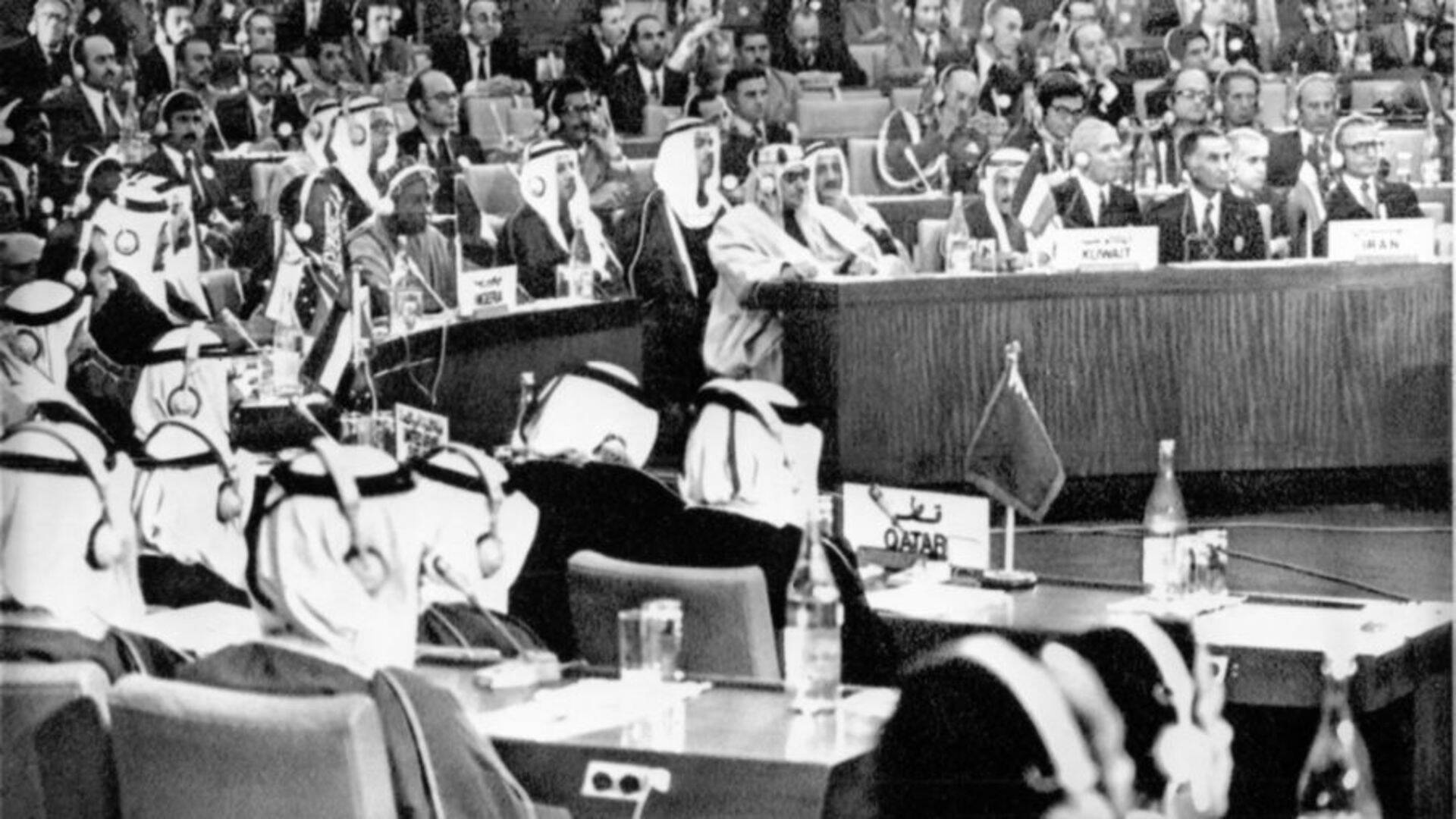
The spirit of South-South solidarity was also expressed in a groundbreaking provision that became the OPEC Fund’s defining feature in the world of development institutions: The resources would be used only to benefit developing countries other than the contributing members. Article 3.01 of the Agreement Establishing the OPEC Fund says: “Eligible beneficiaries of the financing provided by the [OPEC] Fund shall be:
a) the Governments of developing countries other than OPEC Member Countries; and
b) international development agencies the beneficiaries of which are developing countries.”
Agreement was also reached on the kind of financial support the OPEC Fund would provide: loans for projects, programs and balance of payments support. A unique feature of the OPEC Fund’s public sector loans is that in addition to being concessional, they are not conditional: “In carrying out our mandate, we strive to take sustainable, pro-poor approaches, while respecting our partner countries’ development priorities,” then Director-General Suleiman J. Al-Herbish said in September 2013.
Thirdly, the OPEC Fund follows the principle of strict political neutrality. Director-General Shihata emphasized: “If you are a specialized agency, which we are, and our mandate is economic development, then we should leave the political issues to other organizations whose mandate is political reform and political rights."
Following intense preparations, the Finance Ministers of the OPEC member countries met in Paris in January 1976 “amid tight security precautions,” as the New York Times reported. Terrorists had stormed the previous OPEC ministerial meeting in Vienna on December 21, 1975, and three people had been killed. Undeterred, the Paris meeting went ahead “to work out details of a US$1 billion aid fund for poor countries,” the paper wrote. “Final approval was expected tomorrow.”
And so it happened: On January 28, 1976 the Agreement Establishing the OPEC Special Fund was signed in Paris by the 13 member states of OPEC at that time. The account was directly and collectively owned by the parties to the agreement. The fund was to be administered by a governing committee, later to become the Governing Board, representing all members and with voting power distributed according to a two-tier formula. Each member would have one vote. These votes would then be related to member countries’ contributions. The reference to “ministers concerned” in the founding documents was later interpreted in a way that allowed for the introduction of a second supervisory pillar of governance, the OPEC Fund Ministerial Council.
The accord went into force on May 10, 1976 and the OPEC Fund commenced operations in August 1976 with an initial endowment of US$800 million (US$4.5 billion in today’s money). The institution signed its first operation on December 23, 1976, providing a US$7.5 million balance of payments support loan to Sudan. Similar financing was signed with Samoa, Sri Lanka, Guinea, Pakistan and the Central African Republic later that day, making these six nations the first OPEC Fund partner countries. From the outset, the founders of the OPEC Fund took great care to create a lean, agile and flexible organization. Antonio R. Parra, Assistant Legal Counsel from 1979-1984, remembers: “One of the big standouts of the OPEC Fund was how much was achieved with very limited resources. There was no waste and we avoided duplicating efforts.”
Led by Director-General Shihata, a small staff took up residence in Vienna. They were first housed by OPEC, which had moved its Headquarters to Vienna in 1965, and then at the OPEC Fund’s first standalone site at Palais Strudlhof between 1979 and 1982, next to the legendary stairs of the same name in the city’s elegant ninth district.
Abdelkader Benamara, who joined the OPEC Fund in 1979 as a young Algerian economist from the International Monetary Fund on a temporary basis before going on to hold senior leadership positions, including Director of Research and Information, remembers: “I took a leave of absence and wanted to stay for two years. But the mandate was fascinating, and we were a very small group who were able to get things done. It was the South-South dimension that was my inspiration. Many people were not happy with the international economic order in the late 1970s, which was biased against the poor. And there were many ideas and conferences on how to change things. But I felt here at the OPEC Fund we could really do stuff and bring about improvements and change.”
One of the initial goals of the OPEC Fund was to provide funding for the establishment of the International Fund for Agricultural Development (IFAD) at a time when hunger was a widespread phenomenon. Between 1972 and 1975 a three-year famine that became known as the Global Food Crisis took the lives of about 2 million people, mostly in Southeast Asia and Sub-Saharan Africa.
In response, the UN set up IFAD in 1977 and the OPEC Fund provided an initial contribution of US$435.5 million. In a speech in June 2024 the head of IFAD, Alvaro Lario, said at the OPEC Fund Development Forum: “Together we can build communities and societies that are prosperous, vibrant and sustainable.”
Besides IFAD, OPEC Fund member countries also contributed US$110.7 million to the International Monetary Fund’s (IMF) Trust Fund, established to provide assistance on concessional terms to developing countries. Seven OPEC countries (Iraq, Kuwait, Libya, Qatar, Saudi Arabia, United Arab Emirates and Venezuela) transferred their profits from the IMF gold sales to this facility to assist countries affected by the economic challenges of the era. The OPEC Fund also stood at the cradle of the Common Fund for Commodities, first discussed in the mid-1970s and eventually established in 1989.
Most importantly though, the OPEC Fund hit the ground running with its financing of work in the countries of the Global South. Antonio Parra: “South- South cooperation is what the OPEC Fund was and is about.” By the end of 1977 it had provided 71 loans to 58 developing nations. First project loans were signed in critical sectors such as agriculture, energy and transportation in the Middle East, Africa and Asia.
Supporting agriculture and the goal of “Zero Hunger” were fundamental for the establishment of the OPEC Fund. The institution provided its first financing in the agriculture sector in 1977 with a US$1.65 million loan to the Northeast Ghor Canal, today known as King Abdullah Canal, in Jordan. The project, jointly financed with the World Bank, USAID and the national government, provided irrigation and rural development for some 25,000 people in the northern part of the Jordan Valley. The canal has been crucial for making large areas of land productive all year and led to a doubling of agricultural production.
Roads are the arteries of most economies. In order to move essential goods from one place to another or to ship products to the market where they can be sold, generating profit and laying the foundations for a healthy business cycle, modern transport infrastructure is essential. In the 1970s, infrastructure development was a priority in national and international development plans as a key to economic growth. A World Bank report in 2004 looked back at this period: “Infrastructure… has long been recognized as a key element of the enabling environment for economic growth… Similarly, the goals related to human development (education and health) rely on services that require supportive infrastructure – water and sanitation to prevent disease, electricity to serve schools and health clinics and roads to access them.”
One of the OPEC Fund’s first road projects was a US$1 million loan to the Mahalapye Serule Road in Botswana, signed in 1977 together with the World Bank. The 150 km road was upgraded to two lanes with bitumen surfaces. Its scope exceeded physical works and addressed questions of livelihood of communities in danger of being left behind: “The gap between rural and urban incomes has widened in recent years because of the growing demand for skilled individuals, the result of rapid urbanization and mineral development,” the project report stated.
As economies grew and countries sought more and more integration, the construction of roads remained a key sector for the OPEC Fund. “Safe and reliable roads are essential in enabling development,” says the institution’s Development Effectiveness Report 2024. The early 1990s saw a strong increase in lending, but in many countries poor infrastructure remained a serious challenge. When the world gathered in Ethiopia’s capital Addis Ababa in 2015 for the Third International Conference on Financing for Development, which established the framework for funding sustainable development after the Millennium Development Goals (MDGs) concluded, the summit declaration put the annual infrastructure gap in developing countries at “US$1 trillion to US$1.5 trillion” and promised “enhanced financial and technical support.”
To date, the OPEC Fund has invested some US$7 billion in the transportation sector, of which 96 percent were in the public sector and 4 percent were in the private sector. Grants were provided on a very limited basis for technical assistance.
The high demand for OPEC Fund support required a doubling of the institution’s resources after little more than one year. In August 1977, the member countries agreed on a first replenishment of US$800 million. The financing also reflected growing recognition that the OPEC Fund should become a permanent institution. A breakthrough was made in September 1979, when an amendment to the founding agreement allowed loan repayments to be used in future operations. The same year saw the signing of the OPEC Fund’s 100th loan and the creation of the first OPEC Fund logo.
As the 1980s began, political tensions and economic volatility reached new heights. The global economy suffered a significant slowdown, widespread high inflation and worsening economic imbalances. Oil production was severely affected by the Iranian Revolution in 1979 and the outbreak of the Iran-Iraq war in the following year. After 1980, oil prices began a steady decline over the next 20 years.
Responding to the changes in the global environment and the urgent needs of partner countries, the OPEC Fund revised its basic agreement to make it a permanent legal entity, now named the OPEC Fund for International Development. An important step was empowering the OPEC Fund to administer loans and appraise projects, while maintaining the option of working with other international or national institutions.
The next step in institution building was to make Vienna, the capital of Austria, the permanent and sole legal domicile of the institution. On April 21, 1981 the OPEC Fund signed a Headquarters Agreement with the Republic of Austria. In the same year, the OPEC Fund purchased the Palais Erzherzog Wilhelm, also known as the Deutschmeister-Palais. Hanno Scheuch, Director, Institutional & Administrative Unit, Legal Services, says: “The move demonstrated the commitment of the OPEC Fund to Austria as its host country and over the decades a fruitful relationship developed, based on mutual respect and shared goals.”
The institution moved into the new premises from the interim quarters at Strudlhofstiege after the Headquarters Agreement went into force on May 10, 1982, while refurbishment of the building continued.
At that stage, the OPEC Fund had not only settled but also established itself as a prominent development agency with a specific South-South mandate and a distinct approach. It combined balance of payments support with project lending and provided direct assistance to partner countries as well as to development partner organizations.
The first lending program, covering a 3-year period, was limited to countries that were at that time categorized by the UN as the world’s Most Seriously Affected Countries: Afghanistan, Democratic Republic of the Congo, Somalia, Sudan and Yemen. The temporary nature of the OPEC Fund in its early days was reflected in the directive: “In view of the special nature of the Fund, it would be desirable to give, whenever possible, first priority to operations which can be completed in the shortest time possible.” Later the OPEC Fund adopted the practice that under each lending program a list of priority countries was established including least developed countries and low-income countries.
“No international development institution has put as much emphasis on the least developed countries in its operations as the OPEC Fund,” Director- General Shihata stated in 1981. At the same time, the institution retained the flexibility to provide support to higher-income countries on a case-by-case basis, when particular circumstances justified such an approach.
The OPEC Fund’s priorities were expressed not only in the choice of partner countries but also in the selection of priority sectors such as agriculture (and food security), energy, financial institutions and infrastructure. Combining economic with social development, the institution also identified education and health as focus areas, often opening operations with grant financing. For many years, the predominant instrument was public sector loans, which continue to represent the largest part of operations with a current share of around 70 percent of the portfolio.
The OPEC Fund also differed from other development agencies and international financial institutions through its strict impartiality. OPEC Fund development support to partner countries is not conditioned on economic or political parameters but determined based on clear development needs and aligned with the OPEC Fund’s strategy and mission.
Saeid Niazi, who headed the institution’s Financial Operations Department from 2003-2017, remembers: “I felt a strong desire to serve in a place where finance and development intersected. The OPEC Fund represented exactly that combination. Its mission of strengthening South-South cooperation and supporting the needs of developing countries aligned with my values and aspirations. My decision to join the OPEC Fund marked a natural progression in a career built around financial discipline, institutional governance and a commitment to development impact.”
Equipped with this philosophy of impartial partner country support, a diverse financial toolbox and the backing of its member countries, the OPEC Fund successfully established itself. By the time Director-General Shihata was appointed Senior Vice President and General Counsel at the World Bank in Washington, DC in July 1983, the OPEC Fund had approved 328 loans exceeding US$1.8 billion to 82 partner countries through balance of payments support and project and program loans covering almost all economic sectors.
The loan program was complemented early on by a fast-growing grants program: It took no longer than five years from the first grant approval in August 1977 to the 100th in 1982.
The numbers achieved in the early years were impressive, especially since they were delivered with a very small staff “as shall be necessary to carry out [the OPEC Fund’s] functions,” according to the founding agreement. Staffing numbers only grew slowly: “We were six professionals, when I joined,” remembers Abdelkader Benamara.
But the success of the OPEC Fund was not judged only by numerical data. A key question was the extent to which the institution was fulfilling its objectives of assisting the development efforts of partner countries and doing so in a manner that strengthened South-South cooperation and dialogue. Taking stock as he concluded his tenure, Director- General Shihata was able to say: “The OPEC Fund has made its presence felt as a recognized source of international development finance.”
Highlights from the era
Ibrahim F. I. Shihata
Ibrahim F. I. Shihata, 1937-2001, was an Egyptian international lawyer who served as the first Director-General of the OPEC Special Fund, later renamed OPEC Fund for International Development, from 1976-1983. Holding a BA in Law from Cairo University Law School and a PhD in International Law from Harvard University, he worked as Legal Counsel at the Kuwait Fund for Arab Economic Development before being appointed to head the newly established OPEC Special Fund.
Shihata is credited for designing the legal, governance and operational framework of the institution. A dedicated advocate in the fight against poverty, he championed global development cooperation and successfully positioned the OPEC Fund as a multilateral institution committed to supporting developing countries in the Global South.
After his time at the OPEC Fund, he continued his career at the World Bank as General Counsel and Secretary-General of the International Center for Settlement of Investment Disputes (ICSID). He is also remembered as the founding father of the Multilateral Investment Guarantee Agency (MIGA), set up in 1988 to provide political risk insurance and credit enhancement guarantees. G77 statement on development financing
The G77 is pursuing the following:
• Securing a commitment to the UN 0.7% official development assistance (ODA) target, as well as a political commitment to reversing recent cuts in ODA.
• A commitment to triple multilateral development banks’ (MDB) lending as well as to capital increases.
• Improving MDB lending terms, including enhanced concessionality, longer tenor loans and scaling up lending in local currency.
• Reaffirming the principle of additionality of climate finance. New York, May 1, 2025
Palais Strudlhof and the Strudlhofstiege
What the Spanish Steps are to Rome and the Potemkin Stairs are to Odesa is the famous Strudlhofstiege to Vienna, immortalized by Heimito von Doderer’s novel of the same name, one of the main works of Austrian literature of the 20th century.
Built from luminescent limestone, the stairs are seen as a masterpiece of Jugendstil (Art Nouveau). The adjacent neoclassical Palais Strudlhof dates back to the late 1800s, featuring a balcony with colonnade overlooking a garden. Over the years, the site has seen its fair share of history:
In 1914, a secret meeting of the Austro-Hungarian Ministerial Council adopted the final version of an ultimatum to Serbia, essentially triggering the First World War.
In 1970, during the Strategic Arms Limitation Talks (SALT) between the Soviet Union and the United States, the American delegation used the palais as a headquarters. The US Embassy in Vienna is less than a five-minute walk away.
The OPEC Fund and IFAD
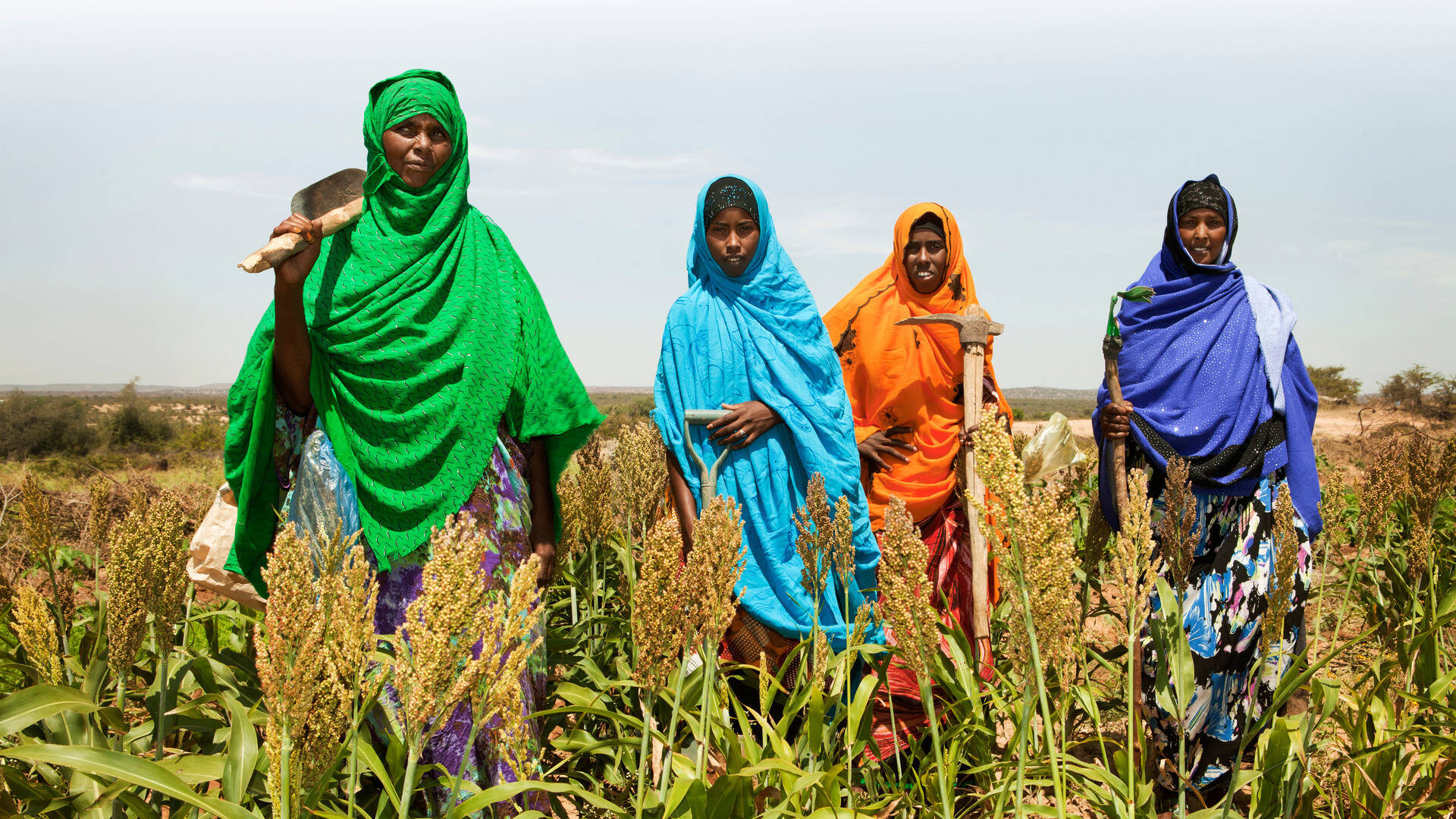
The International Fund for Agricultural Development (IFAD) has its origins in the UN World Food Conference of 1974, when food shortages and famine in Asia and Africa called for urgent action. OPEC country delegates suggested the establishment of an international fund to help finance food production in the world’s poorest nations. They offered to provide almost one half of the new fund’s starting capital.
When IFAD was launched in December 1977, the OPEC countries, acting through the then already established OPEC Fund, pledged US$435.5 million, while OECD countries gave US$569 million and other developing countries US$20.6 million. The OPEC Fund later contributed an additional US$20 million to IFAD’s first replenishment.
The establishment of IFAD as a joint effort by OECD and OPEC countries, representing developed and developing nations, was widely praised as exemplary. Speaking at its 25th anniversary celebrations in February 2003, then UN Secretary- General Kofi Annan said: “The creation of IFAD represented a new type of partnership. It was an early example of a global alliance across geographic or ideological differences, joining together for the shared goal of eradicating poverty and hunger.”
The partnership between the OPEC Fund, which considers agriculture one of its focus areas and made food security a cross-cutting theme in later years, and IFAD, which invests in rural people and communities to increase productivity, income and resilience, proved to be a perfect match. It has since gone from strength to strength and to date the OPEC Fund has provided more than US$1 billion to more than 120 projects.
Examples include rural projects in Guinea-Bissau, Rwanda and Tanzania. Most recently, the OPEC Fund and IFAD signed a cooperation agreement in 2024 to strengthen food security and build climate resilience through joint projects. The latest joint project is a livestock and livelihoods development program in Sierra Leone, a country where more than 21 percent of the population is undernourished.
Roads to success
In the 1990s, economic growth drove demand for better road infrastructure.
Here are examples of OPEC Fund projects:
1991 Ghana National Feeder Road Rehabilitation and Maintenance Project Designed to upgrade and expand Ghana’s rural road network and foster social and economic development in rural communities, this project helped rehabilitate 2,500 km of feeder roads, re-gravel 2,850 km of agricultural access roads and construct 5,000 drainage culverts.
1992 Botswana Trans-Kalahari Road Project With the aim of providing an all-weather link between Botswana’s isolated western districts and the more populated eastern parts of the country, the project financed upgrading of the 589-km long Trans-Kgalagadi road.
1993 Bobo-Dioulasso-Orodara Mali Border Road Project in Burkina Faso This project facilitated the transport of agricultural inputs and products by upgrading a 130-km stretch of dirt road that passes through the country’s most fertile areas. Rehabilitated to all-weather, paved surface, the road promotes trade with other areas.
1994 Rehabilitation and Construction of the Nouakchott-Akjoujt Road Project This project improved the link connecting the outlying agricultural province of Inchiri with the capital city Nouakchott by rehabilitating the 254-km desert road to an all-weather surface. Access to Algeria and Morocco has been facilitated, enhancing Mauritania’s ability to export ores and minerals.
“Life’s caravan never turns back”
As the ocean gateway for six landlocked neighbors, Tanzania, an East African nation of 67 million people, plays an outsize role in regional development. Its ports, particularly Dar es Salaam and Tanga, control access to maritime routes for Zambia, Malawi, Burundi, Rwanda, Uganda and the Democratic Republic of the Congo, enabling them to import and export goods that are crucial for their economies. Yet despite its potential as a conduit country, Tanzania’s transport infrastructure scored just 3.34 out of 100 in the Africa Infrastructure Development Index 2022 – far lower than the regional peers Uganda (6.42), Kenya (10.43) and Rwanda (11.55).
To address this deficit and help the country improve its connectivity, the OPEC Fund has joined with partners including the African Development Bank (AfDB) on several road and rail projects across Tanzania. In 2025, the OPEC Fund approved financing for the Uvinza-Malagarasi segment of the Tanzania Standard Gauge Railway (SGR). This project aims to enhance regional integration and improve transportation for passengers and freight. The OPEC Fund’s US$75 million loan provides financial support for the implementation of the 156 km section of the railway line in Tanzania.
Juan Felipe Murcia, OPEC Fund Development Effectiveness Officer, says: “This project significantly enhances regional connectivity, stimulates economic growth and provides a modern, efficient and reliable transportation corridor. It is designed to reduce transport costs, alleviate pressure on existing roads and unlock the region’s economic potential. It will benefit communities by improving access to markets, promoting agricultural value chains and supporting local economic activities.”
The OPEC Fund has a strong track record in Tanzania’s transport sector with the construction and upgrading of vital traffic arteries – getting goods to ports, farmers to markets and patients to hospitals. As the Swahili proverb has it: “Life’s caravan never turns back.”
What's in a name?
The OPEC Special Fund
The first name of the institution as defined in the basic agreement signed on January 28, 1976. The name expresses the initial intention of the founding members to establish a temporary special account administered by a joint committee and consisting of a series of member states’ national accounts, pooling resources in a flexible and efficient manner. It was an account and not a fully-fledged international institution possessing legal personality.
The OPEC Fund for International Development
The name adopted following the revision of the basic agreement on May 27, 1980 converting the Special Fund into an autonomous agency with an international legal personality. This amendment made it possible for the OPEC Fund to provide loans in its own name. The indefinite continuity of the OPEC Fund was assured with amendments allowing loan repayments to be used in future operations.
OFID
The acronym was introduced together with a new logo and corporate identity in 2006 with the goal to raise the institution’s public profile and present a fresh look. A new logo was created including the motto “Uniting against Poverty.” While OFID was widely used, the full legal name remained unchanged as the OPEC Fund for International Development.
The OPEC Fund for International Development
Following a comprehensive corporate rebranding and the launch of a new brand identity, the institution reverted to its full name in November 2020. The new logo and a refreshed color palette symbolized the start of a new journey, setting sails for new shores.
The Deutschmeister-Palais

The Deutschmeister-Palais, also known as Palais Erzherzog Wilhelm, has been the official Headquarters of the OPEC Fund since 1981. Located on the Parkring end of the Ringstrasse, Vienna’s main boulevard, the building was designed in the years 1864- 1866 by the architect Theophil von Hansen as a residence for Archduke Wilhelm Franz of Austria (1827-1894), a member of the ruling Habsburg dynasty and a cousin to Emperor Franz Joseph.
The palais in neoclassical style is considered one of Hansen’s masterpieces and one of the finest along the Ringstrasse. As Grand Master of the Teutonic Order of Knights, Archduke Wilhelm in later years housed the religious society in his building. The former grand hall is still emblazoned with crests, seals and other emblems of the order.
For more than four decades, the OPEC Fund has maintained the palais, both preserving its historic elements from the 19th century while upgrading its offices for doing business in the 21st. The interested public is invited to visit the historic premises once a year on Austria’s National Heritage Day.
The African Fertilizer Development Center in Zimbabwe
The Center started operations in 1987 to conduct and support research and development, demonstrate the role of fertilizers for improved agricultural output and foster regional and international cooperation. The OPEC Fund supported the establishment with a US$50,000 grant in 1983 for initial outlays. In March 2025, the newly appointed Commissioner for Agriculture at the African Union Commission, Moses Vilakati, announced that the reactivation of the Center will be one of his “key priorities”.