We use Cookies. Read our Terms
Our greatest achievement is the sheer scale of impact
Hamad S. Al-Bazai has been Chairman of the OPEC Fund’s Governing Board since 2017.
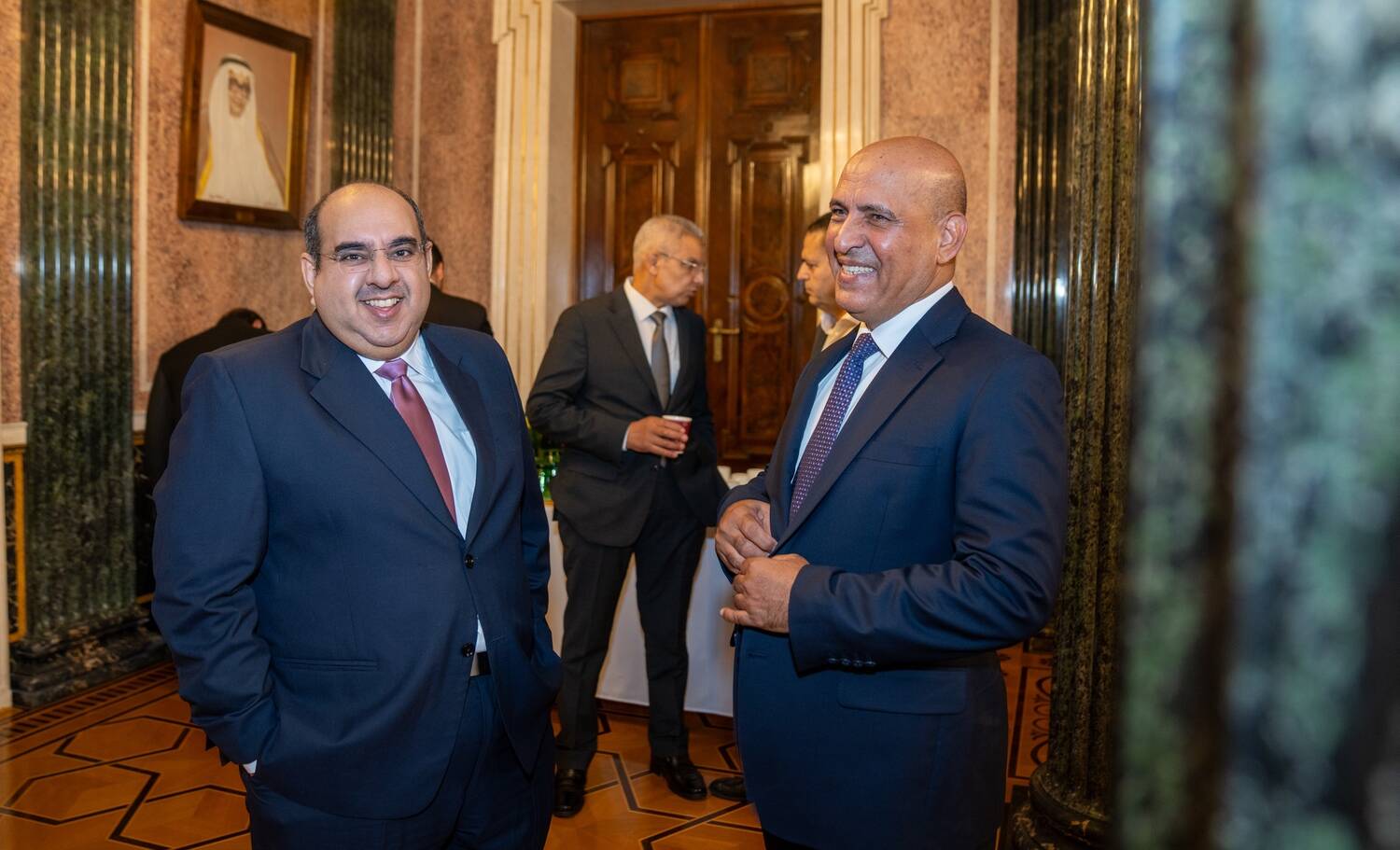
Hamad S. Al-Bazai has been Chairman of the OPEC Fund’s Governing Board since 2017. Previously, he served as Saudi Arabia’s Vice Minister of Finance (2009-2021) and was Associate Professor of Economics at King Saud University, Riyadh.
OPEC Fund Quarterly: Can you tell us about your early life and how your professional journey brought you to the OPEC Fund?
Hamad S. Al-Bazai: I began my career as a university professor, teaching Economics at King Saud University in Riyadh, Saudi Arabia. I served as Assistant Professor, then Associate Professor and later as Acting Dean of the College of Business and Economics. My professional transition came when I joined the Ministry of Finance as Deputy Minister for Economic Affairs. That role opened the door to international financial relations – working with institutions like the International Monetary Fund, World Bank, Islamic Development Bank, as well as representing Saudi Arabia in the G20.
Through these responsibilities, I became deeply involved in development finance and the work of multilateral institutions. In 2005, I was appointed Governor for Saudi Arabia at the OPEC Fund, before being elected Chairman of the Governing Board in 2017. This journey reflects my commitment to advancing development cooperation and ensuring that institutions like ours deliver real impact.
OFQ: The OPEC Fund member countries set up our institution as an “act of South-South solidarity” – is this approach still valid?
HAB: Absolutely. The principle of South- South cooperation remains as relevant today as it was in 1976. Our membership is entirely from the Global South and our partners are developing countries – many of them among the least developed. This identity is much more than a slogan: It is a guiding principle. While the world has changed, people’s fundamental needs remain: access to clean water, energy, education, healthcare and infrastructure. What has to evolve is how we deliver on these needs.
Reinforcing our South-South mandate means updating our operational framework, transferring knowledge and providing technical assistance alongside financing. We need to remain demand-driven, respecting partner countries’ priorities while offering expertise gained from similar projects elsewhere. That is how we’ll keep the spirit of solidarity alive and relevant for the next 50 years.
OFQ: When you became Chairman of the Governing Board in 2017, what were your main tasks and the most pressing items on the OPEC Fund’s agenda?
HAB: The priorities were clear: maximize the impact of our resources, enhance efficiency and strengthen the OPEC Fund’s visibility. As the largest shareholder, Saudi Arabia places great emphasis on ensuring that contributions are used effectively. The challenge is not only to deploy resources wisely but also to leverage them through co-financing and partnerships.
The OPEC Fund is unique because it does not finance projects in member countries; all assistance goes to nonmember developing nations. That makes it even more important to spread our impact across regions and sectors. We’ve worked hard to ensure that the OPEC Fund is not just a financial contributor but also a catalyst for development, using its resources strategically to achieve the greatest possible benefit.
OFQ: What are the benefits of being an OPEC Fund member country?
HAB: Membership is rooted in a sense of responsibility and solidarity. For Saudi Arabia and other members, contributing to the OPEC Fund is a moral obligation and a strategic choice. It reflects the belief that helping others strengthens the global community.
While direct financial benefits to member countries are not part of our mandate, there are indirect advantages. For example, through trade finance and private sector operations member country companies can participate in projects in partner nations. This creates opportunities while preserving the OPEC Fund’s core principle of supporting non-member countries. Beyond simple economics, membership also enhances our international standing and influence, demonstrating leadership in global development efforts.
OFQ: How would you advise the OPEC Fund to navigate the twin challenges of energy as the engine of development and climate with the obligations under the Paris Agreement?
HAB: Energy poverty remains a critical issue. Millions of people in least developed countries still lack access to electricity. Our approach must always balance environmental concerns with human needs. Affordable energy – whether conventional or renewable – is essential for development.
The OPEC Fund has supported initiatives like clean cooking to reduce reliance on wood, which harms both health and the environment. At the same time, we’re investing in renewable energy and promoting climate-friendly solutions. The key is pragmatism: striking a balance between climate goals and the urgent need for energy access. Technology and partnerships will help us achieve this equilibrium, ensuring that development and sustainability go hand in hand.
OFQ: What would you say are the OPEC Fund’s landmark achievements over the last 50 years?
HAB: Our greatest achievement is the sheer scale of impact. The OPEC Fund has financed thousands of projects across more than 125 countries, improving lives through better healthcare, education, infrastructure and energy access. Recent development effectiveness reports show impressive numbers of people benefiting from our work.
Beyond financing, we’ve provided technical assistance and shared knowledge, helping countries implement projects efficiently. These contributions have transformed communities – bringing clean water, electricity, schools and clinics to places where they were once out of reach. For me, the most rewarding aspect is knowing that our efforts have made a tangible difference in people’s lives all over the world.
OFQ: What are your views of the Strategic Framework 2030 and its implementation so far?
HAB: The Strategic Framework 2030 was a turning point. It provided a roadmap for adapting to a changing world while staying true to our mission. We introduced new approaches such as policy-based lending and broadened our sectoral focus to include technology and innovation. We also diversified our funding sources through a borrowing program, which has strengthened our financial position. Although borrowing came only recently in our history, it has been successful and will become even more impactful as we improve our credit rating. The strategy emphasizes flexibility, allowing us to respond to emerging challenges while maintaining long-term goals. Five years remain and we are determined to deliver on its promise of greater impact and effectiveness.
OFQ: How do you rate the success of the borrowing program?
HAB: It is a significant achievement. By accessing capital markets, we’ve expanded our resource base far beyond member country contributions. This enables us to finance more projects together with other institutions. Our ambition is to secure a stronger credit rating, which will lower borrowing costs and attract more investors.
Achieving AAA status would open doors to new opportunities and allow us to channel additional resources to partner countries. Ultimately, borrowing is not just about funding; it is about positioning the OPEC Fund as a credible and competitive player in global development finance.