We use Cookies. Read our Terms
“The world will run on sun and wind 40 years from now”
Bill McKibben’s new book, Here Comes the Sun, spells out many reasons to be hopeful about climate action
Here Comes the Sun: A Last Chance for the Climate and a Fresh Chance for Civilization
Bill McKibben, W. W. Norton & Company, New York, 2025, 224 pages, ISBN: 978-1-324-10623-4
If you’re looking for doom and gloom on what awaits our warming planet, there is no shortage of books out there to satisfy a masochistic desire to look the inconvenient truth square in the face.
Thankfully, not every book about climate change, rising emissions or the energy transition takes such a fatalistic approach. Environmentalist and frequent New Yorker contributor Bill McKibben’s new book, Here Comes the Sun: A Last Chance for the Climate and a Fresh Chance for Civilization, fits nicely into that second category.
McKibben peppers the book with enough facts and figures to make even a hardened climate pessimist brighten up: in 2024, 92.5 percent of all new global electricity brought online came from renewables; in the USA that figure was even higher at 96 percent. Tracking the unique acceleration of solar tech, he says that it took from 1954, the year the solar cell was invented, to 2022, to install the first terawatt of solar power. But it didn’t take another 68 years to deploy the second terawatt – it took just two.
“For the first time,” McKibben writes, “we’re putting up a gigawatt’s worth (which is to say a coal or nuclear power plant’s worth) of solar panels every day.” In other words, it’s easy to come away from the book with the sense that we might actually be on the cusp of turning things around.
But not to get overly optimistic, McKibben presents some harder facts to bring that optimism a little closer to the ground: “We’ve already done fundamental damage to the planet’s physical systems, to the point of altering the jet stream and weakening the Gulf Stream; we’ve already raced past the 1.5 degree Celsius rise in global temperature that we pledged in Paris to avoid.” Elsewhere, he says the world will run on sun and wind 40 years from now, but is less optimistic that the current pace of deployment will be fast enough to avoid the most catastrophic effects of climate change.
McKibben has been writing about climate for quite a while now. His first book, The End of Nature, published in 1989, gave the general public an early glimpse at global warming. 2019’s Falter: Has the Human Game Begun to Play Itself Out? examined the species-level risk people are taking by fueling climate change. Additionally, he writes the climate-focused Substack “The Crucial Years.”
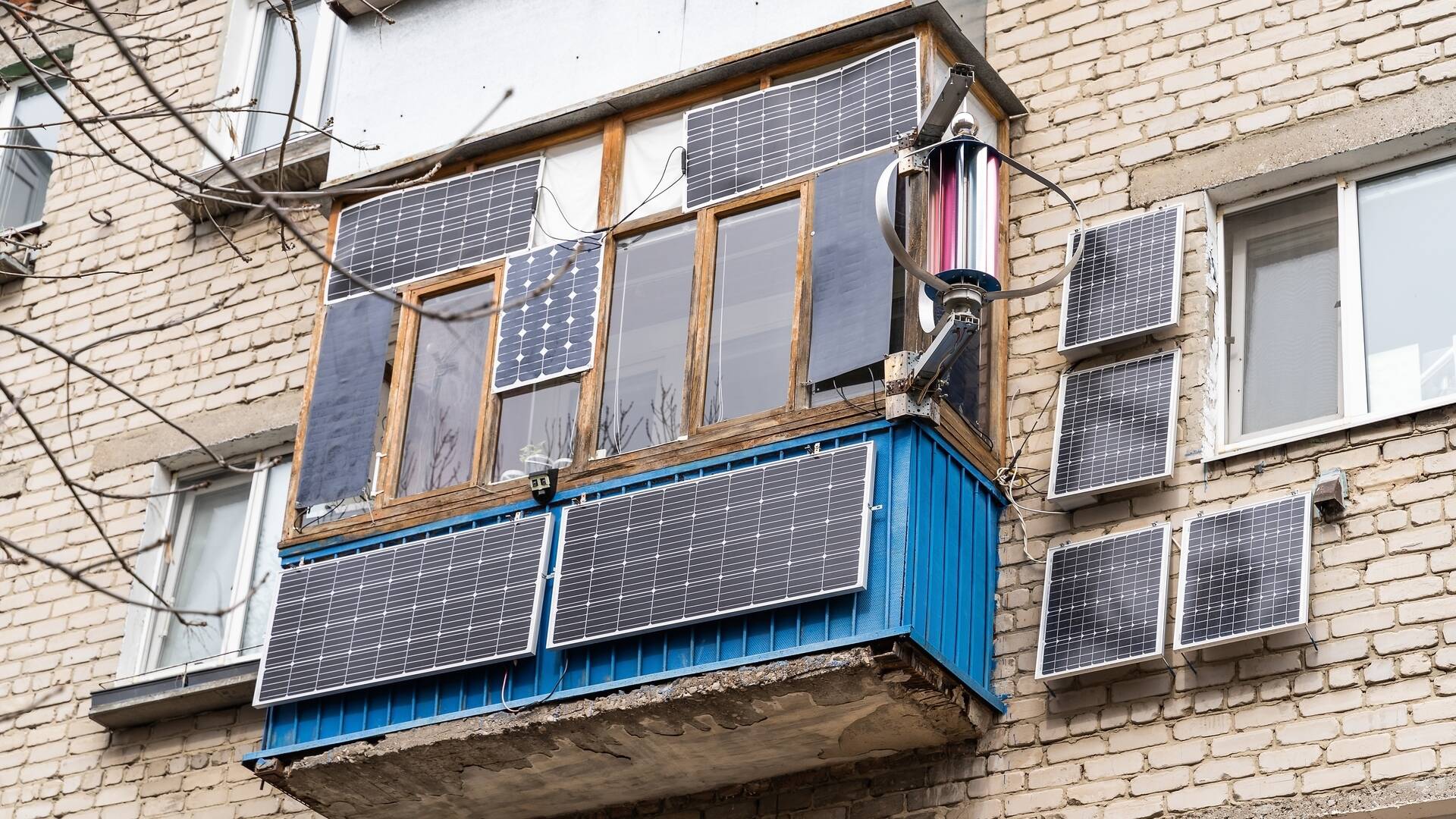
Alongside the rapid pace of deployment, McKibben also documents the rapid drop in prices, one of the key reasons solar power is having a moment right now. In 2014, The Economist held that “solar power is by far the most expensive way of reducing carbon emissions;” but a decade later, in 2024, the magazine put out a special issue devoted to solar energy that said, “An energy source that gets cheaper the more you use it marks a turning point in industrial history.” Later he writes, “IKEA Germany even sells balcony power plants (Balkonkraftwerke), which can now be seen hanging off homes all over the country.”
Besides the rapidly dropping deployment cost, one key advantage that solar and other renewables hold is they don’t require a large fuel supply chain – and the geopolitical friction that comes with it. For solar and wind, the fuel comes to you. “Forty percent of the world’s ship traffic, for instance, consists of moving coal and gas and oil back and forth across the ocean to be burned, a delivery job the sun accomplishes each morning as it moves across the heavens,” McKibben writes.
As the recent crisis in the Middle East is showing the closure of bottlenecks like the Strait of Hormuz can swiftly wreak global economic havoc. As an article in the Financial Times pointed out, countries that have a large chunk of their energy generated from solar and other renewables, as Spain does, can better withstand the shock waves generated by the biggest oil disruption in history.
Price is hardly the only economic security issue. Solar panels, by their nature and sheer ubiquity, are decentralized – in stark contrast to the all-eggs-in-one-basket situation of a power plant. A single drone can now knock out an entire power plant and therefore electricity and heat for hundreds of thousands of people, a case demonstrated by Russia’s four years of drone attacks in Ukraine. A country that relies on solar and wind power deployed everywhere is more resilient also to such risks.
Finally, solar panels do not emit the harmful emissions of coal- or gas-fired power plants. This eliminates the need for a buffer zone in living near such an emissions-spewing power plant. Life alongside solar panels, or at least the shade they create, can even have its benefits. The book points out some interesting examples: In France, solar panels were found to increase yields for Chardonnay grapes by as much as 60 percent. In Arizona, soil moisture under the panels was 15 percent higher than nearby unshaded plots, allowing black-eyed peas to grow faster and under less stress. And in Australia, wool from merino sheep improved in both quality and quantity with the shade providing “shelter for the sheep and the grass.”
With all these bright points, what’s stopping every country from becoming an “electro-state”, as China is positioning itself to be? (Roughly half of all installed clean energy is within the Middle Kingdom’s borders). Politics, especially on the US right, is a key reason according to McKibben; and that goes far beyond President Donald Trump’s war on renewables.
In the late 1970s, US President Jimmy Carter hoped that with dedicated funding, a fifth of the country’s electricity could come from solar power by the year 2000. He even installed solar panels on the White House roof. When his successor Ronald Reagan took office not long after, he slashed solar research and removed the panels; a senior administration official even said they were a “joke”. (The current incumbent is building a ballroom.)
In the USA, politics from state to state can dictate how many hoops one must jump through to put solar panels on your own home. That’s why you see seemingly counterintuitive situations like the per capita solar PV being higher in tiny Rhode Island than in sun-rich Arizona.
Of course, the political obtuseness runs in both directions. Deep red state Utah has one of the most streamlined regulations when it comes to installing balcony solar systems; and unlike most other places in the USA, the state’s residents do not need to get a utility company’s permission to install small-scale plug-and-play solar panels. On the other end of the political spectrum, McKibben writes about how a proposed 10-acre solar farm in his deep blue home state of Vermont was axed because “the trees planted to screen the view would take ‘several years’ to grow and that wasn’t enough.”
Yet for all the tangled rules and regulations, as well as the open hostility from one political party with regards to renewable energy, McKibben remains optimistic that although it may be too late to stop global warming, solar energy’s recent gains might be a final chance to “restart that civilization on saner ground.”
A paperback edition of his book, due in August 2026, includes a new epilogue that provides an update on some of the fast-moving things that have happened with our planet in the year since the hardcover was released, which, given the recent geopolitical news and its earth-sized implications, is quite a bit.
Of course, at the speed the climate is changing, solar energy’s time to enact its own change is razor thin. After all, in the Beatles song that the book takes its name from, George Harrison sings “I feel that ice is slowly melting.”