We use Cookies. Read our Terms
“The size of global challenges requires us to scale our ambition”
After 50 years of pioneering development work, OPEC Fund President Abdulhamid Alkhalifa envisions the institution entering a new era – with more projects, more financing and more impact. Yet the mission remains unchanged: Improving people’s lives.
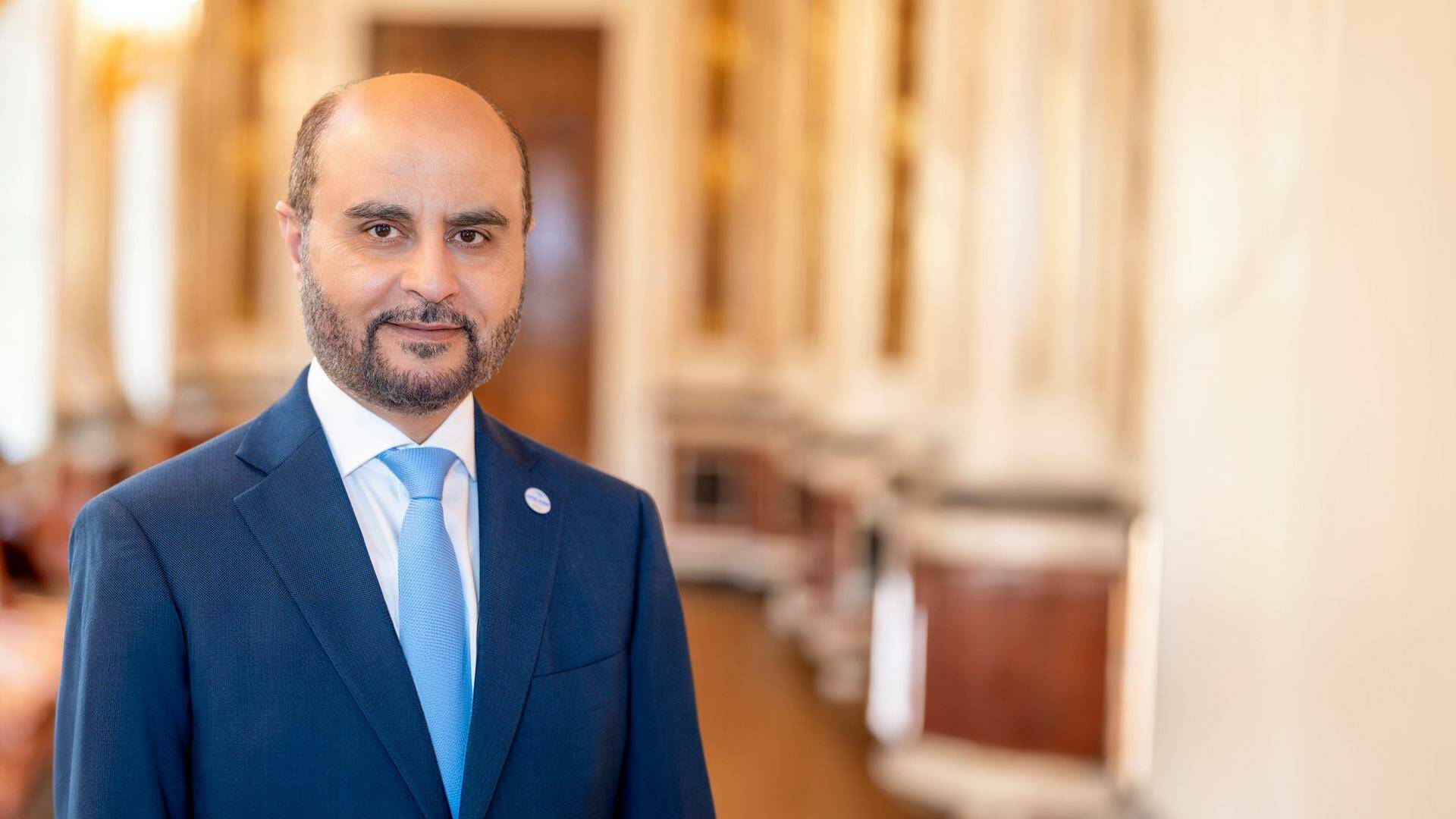
OPEC Fund Quarterly: When you joined the OPEC Fund in November 2018, what were your first impressions?
Abdulhamid Alkhalifa: I came in well aware of the challenges and opportunities ahead. Conversations with colleagues confirmed what I had already sensed – this institution has a strong mandate, global reach and incredibly dedicated staff. A comparatively small team was achieving remarkable results in Africa, Asia, Latin America and the Caribbean. At the same time, I recognized that our business model at the time constrained how far we could go.
OFQ: How did you seek to overcome those constraints?
AA: Development institutions measure success by impact – real improvements in people’s lives. To expand that impact, we needed a strategy that unlocked growth. With the launch of the Strategic Framework 2030 (SF2030), our Governing Board and member countries empowered us to reimagine our future and scale our ambition.
This meant aligning our systems, financial frameworks and governance with the world’s leading multilateral development banks (MDBs).
Strengthening our risk functions, enhancing decision-making and modernizing our business processes set the stage for a major shift: accessing capital markets to significantly increase our financial capacity.
OFQ: You previously served at the World Bank and the Saudi Public Investment Fund. Were you surprised by how much the OPEC Fund delivered given its size?
AA: Absolutely. The efficiency and agility of the institution were noteworthy. As we grow, preserving and enhancing those strengths is essential. That’s why we are investing in digital systems, innovation and talent – to ensure we remain fast, flexible and focused on results.
OFQ: Five decades on, how has the institution evolved while remaining true to its founding vision?
AA: Our mission of South-South solidarity is unchanged, but its execution has transformed. Historically, the OPEC Fund has committed more than US$30 billion to development, including delivering improved energy access to 21 million people between 2019–2023.
SF2030 took that legacy and expanded it. We evolved from a direct lender to a development catalyst: using our capital to de-risk and mobilize private finance, shaping innovative markets for clean energy, food security and resilience and shifting from project participant to project leader and convener.
The result: annual commitments more than doubled, from US$813 million in 2018 to US$2.3 billion in 2024, with additional growth in 2025 and beyond. In summary, our role is broader and our global impact deeper.
OFQ: Can you share a project or field visit that has stayed with you?
AA: There are many. I remember visiting Egypt in 2019 following our loan to the country’s Social Development Fund. Listening to people describe how their lives had been transformed through access to jobs and more dignified livelihoods was profoundly moving. Whether it is a new road in Azerbaijan bringing children safely to school, irrigation in Zimbabwe empowering women farmers or clean cooking programs improving health – the people are why we do this. We must never forget the human dimension of what we do.
OFQ: Part of the institution’s strategy under your leadership has been to scale through partnerships and financial innovation. Why is this so important?
AA: Development and commercial finance are not competitors, they are complementary engines of progress. From the very beginning, the OPEC Fund has partnered with other MDBs like almost no other institution. This is how we have delivered a truly global mandate over 50 years, reaching communities that even much larger partners may not be able to reach.
Our deep relationships with partner countries gives us a unique vantage point: we understand their priorities and we can align our resources across the world. But the size of global challenges requires us to scale our ambition. So we strengthened our origination and syndication capabilities – designing solutions, mobilizing partners and adopting innovative financing models to ensure that every dollar we commit delivers the greatest possible value for sustainable development.
Our capital market program, including oversubscribed bonds, has fortified our balance sheet. This allows rapid growth while maintaining strong financial health.
The billions raised are not the achievement: what they make possible is. They enable millions of people to connect to electricity, farmers to adapt to climate change and communities to gain access to essential services.
OFQ: You often emphasize that crises are interconnected. How does the OPEC Fund address that?
AA: Climate affects food production, food security affects economic stability, and access to energy underpins all of it. So we never approach these issues in isolation.
Our integrated approach is built into our Climate Action Plan, which ensures that by 2030 at least 40 percent of our financing directly supports climate goals, whether through solar energy expansion in Mauritania or resilient health infrastructure in the Caribbean, where access to energy is critical for essential services.
And partnerships amplify our ability to connect these dots. Our US$450 million framework agreement with the Saudi developer ACWA Power, following six successful joint projects, is accelerating the rollout of renewables and green hydrogen in countries that need clean, reliable and affordable energy to sustain development. By designing solutions that span sectors, we ensure our investments deliver multiple benefits, improving lives today while building resilience for tomorrow.
OFQ: How will the OPEC Fund’s drive to secure US$20 billion in commitments by 2030 influence the development agenda for the next half-century?
AA: We are shifting from scale to systemic transformation. The OPEC Fund will be larger, more capable, more innovative but always agile and efficient. I am proud of the culture we are building. Ambition, innovation and accountability: this is visible in our teams, in the ideas they bring forward, in the pride they take in delivering for communities. That mindset is our engine for the future.
Our priorities are straightforward. First, we need to mobilize much more capital, not just billions from our own balance sheet, but trillions in private investment that can drive sustainable development at scale. Second, we are deepening our work at country level, tailoring solutions to each country’s specific needs and opportunities.
And third, we remain laser-focused on results. What matters is the difference we make to people’s lives. At the end of the day, we should be judged not by how much money we commit, but by the impact we deliver.
OFQ: Vienna has been the OPEC Fund’s home from the start. What are the benefits of being located here?
AA: Vienna is a wonderful host city: safe, beautiful, internationally connected and home to more than 40 international organizations. Choosing Vienna for our Headquarters was one of the OPEC Fund’s best strategic decisions. The Austrian authorities are consistently supportive. I also enjoy the rich nature around Vienna and often hike on weekends.