We use Cookies. Read our Terms
The perfect storm is coming – and we are implicated
Experts can name many Black Swan events, from “Carrington-class” solar storms to “Kessler” space collisions. But when our obsession with digitalization is part of the problem, what then?
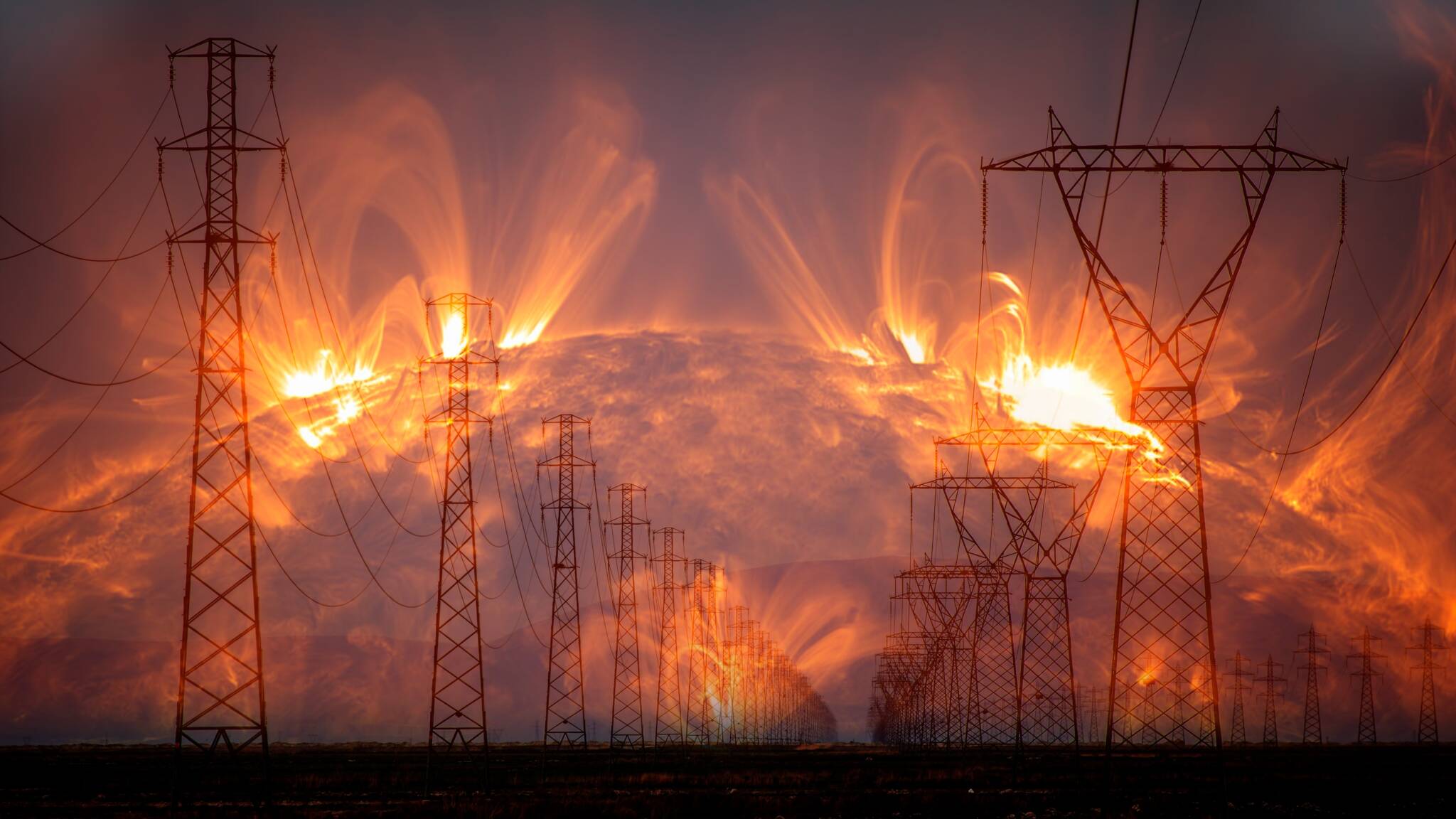
For decades, we have built vast digital networks undersea, overland and in orbit around the Earth, “optimizing” everything from finance to healthcare to navigation. Most transactions, consultations and journeys now start and end via a vast range of cloud-based services running on digital infrastructure. Deeper and deeper interconnections between various sectors are praised for boosting efficiency and delivering more with less. Such is the promise of synergy.
But what if this network of digital systems turns out to be our Achilles’ heel? A false economy that puts activity over accountability, as we digitize every imaginable aspect of our lives? When Digital Systems Fail: An Expert Report on the Hidden Risks of Our Digital World, released by the United Nations Office for Disaster Risk Reduction (UNDRR) in May 2026 is a sobering reminder to curb our hubris, clarify our roles and maintain basic analogue fallbacks – not for the sake of Luddite alarmism, but to have functional options available when all else fails.
The 24-page report opens along three main lines covering space, terrestrial and undersea risks, using documented historical disasters to explain a range of possible scenarios measured in hours, days and weeks after a particular event. “Possible” is the operative word here, as the authors underline how: “The scenarios trace plausible chains of events through tightly coupled systems. They are not exercises in forecasting. Instead, they were attempts to make explicit what is usually left implicit: the dependencies that never appear in risk registers, and the moments at which a digital system crosses, without warning, into a large digital disruption.”
The authors give several specific examples, dating back to the 1859 Carrington Event, a solar storm that knocked out telegraph systems across the Northern Hemisphere, electrocuted operators and set offices on fire. According to a Lloyd’s of London insurance assessment, a similar event now could cause more than US$2.5 trillion in damage. Another potential threat is the Kessler effect (or syndrome), involving a chain reaction of collisions between satellites and space debris. In a worst-case scenario, the ensuing cascade could render parts of Earth’s orbit too hazardous for space operations, while disrupting satellite services for years or even decades to come.
The second section of the report details four interconnected infrastructure domains:
- Power grids as the foundational layer – susceptible to heatwaves, as in London in 2022 with the Oracle and Google Cloud failures.
- Submarine cables as the connectivity backbone – vulnerable to rupture as seen in the Red Sea in 2024, when a quarter of all traffic was disrupted between Europe and Asia.
- Satellite systems and space weather impact – such as the 2003 Halloween solar storms that disrupted satellite operations and caused aviation communication blackouts.
- Data centers as the hidden concentration risk – notably in 2017 when hurricanes hit the US Gulf and East Coasts, causing widespread generator failures and data center shutdowns.
Why the Global North will never be immune
Japan has long been one of the most advanced, disaster-resilient countries in the world, renowned for its technological prowess and its earthquake monitoring systems. But in March 2011, a tsunami hit the country and did more than flood the northeast coast and cripple a nuclear power station – it also blindsided the country’s decision makers.
Waves up to 40 meters high crashed 10 km inland at speeds of up to 700 km/h, destroying the regional electricity grid and severely damaging the emergency backup systems at the Fukushima Daiichi nuclear power plant. Cooling capacity was incapacitated within minutes, overheating spiraled within hours, making a meltdown inevitable within days. But it would take several weeks to assess the full scale of the disaster because so much digital sensor data had been scrambled or delayed.
The lessons were clear: When digital infrastructure fails, governments and other actors can quickly lose all capacity to evaluate damage, coordinate responses and broadcast guidance – in ways that magnify the initial disaster. According to the authors, around 90 percent of digital service disruptions caused by natural disasters result not from direct physical damage but from secondary ripple effects: “The number of people ultimately affected is estimated to be up to 10 times higher than those exposed to the initial event.”
In the days and weeks following the disaster, more than 150,000 people were evacuated from the area around the Fukushima Daiichi nuclear power station. Many were relocated multiple times, as radiation assessments and evacuation zones were repeatedly revised based on limited information. Ultimately, more than 1,000 evacuees were officially recognized as “disaster-related deaths,” based on the physical and mental toll of long-term displacement.
Why the Global South struggles to prepare
If rich countries can be overwhelmed on so many levels, from emergency response to public information, how can the world’s poorest countries be expected to manage similar disasters? Take Tonga, for example, a small island developing state of 100,000 people in the middle of the Pacific Ocean, whose main connection to the internet lies via a single submarine cable stretching over 800 km from “nearby” Fiji.
In January 2022, an underwater volcano erupted off the coast of the Tongan capital, Nuku’alofa – and promptly severed that cable. Satellite links provided some limited backup connectivity, but it would ultimately take five weeks for a specialist ship to travel almost 5,000 km from Papua New Guinea and complete the necessary repairs.
In some ways the world got lucky, say the authors: “Had the same cable geography applied to a major routing hub, a choke point where dozens of systems converge, the outage would not have been a footnote of a volcanic eruption. It would have been a financial and logistical crisis measured in continents.” Entire cloud-based systems could have been knocked offline; multiple hospitals could have lost access to their patient data; financial clearing could have been suspended; and port operations could have slowed by more than half, according to some estimates.
Why we need to understand systemic interplay
The report goes on to highlight the links between so-called intentional and non-intentional risks. In other words, how natural disasters expose vulnerabilities that are then exploited by malicious actors; or by contrast, where cyberattacks set off cascading failures in the physical world – in nuclear power stations, for example. While each dimension demands attention in its own right, it is their interplay that presents a systemic threat. The authors note how: “A heatwave may coincide with high electricity demand. A cable cut may occur while networks are already under strain. In such situations, failures do not stay confined to one system or sector. They spread.”
The report concludes with a series of recommendations, calling on governments to clarify legal definitions, establish incentives for preparedness and boost coordination on satellites, space weather, submarine cables and data centers. One key task is to reinforce analogue fallback capacity by investing in training and scenario planning in key sectors such as energy, finance, telecommunications and emergency management. The final word is a simple plea to turn these warnings into concrete “action” before the next Black Swan arrives at our shores, threatening millions of lives and trillions of dollars – perhaps on the back of the next El Niño, set for later this year.