We use Cookies. Read our Terms
“Technology does not fail Africa’s farmers, systems do”
Unless we treat system building as a generational investment rather than a political instrument, agricultural transformation will remain largely out of reach
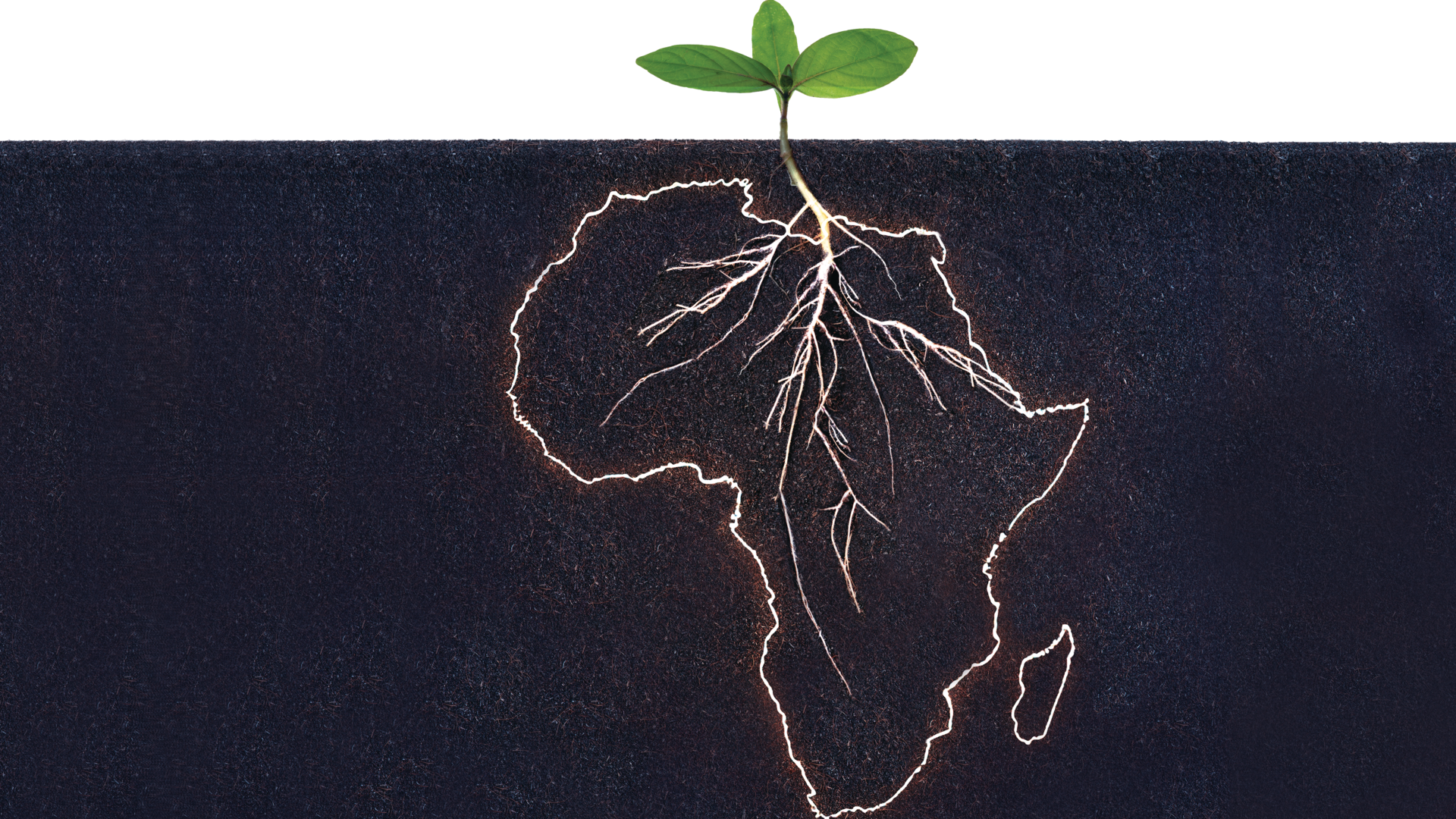
Across much of Africa, growth in agricultural productivity remains slow despite decades of investment in improved seeds, fertilizer subsidies, mechanization programs and donor-supported initiatives.
The challenge is rarely the absence of technologies or innovation initiatives. Rather, it reflects weaknesses in the systems used to support their development, dissemination and sustained use.
All too often, the actors that make up these systems – farmers, agents, universities, cooperatives, agribusinesses, financial institutions, NGOs and policy-makers – operate in silos, with limited coordination and continuity. Far too frequently, their efforts become isolated interventions that fail to build a functional system for all relevant actors.
The problem is one of perception and purpose. An agricultural innovation system (AIS) should not be viewed as a project, but rather as a network of relationships through which knowledge is generated, shared and applied. When these actors interact strategically, innovation can spread and scale.
However, many initiatives are organized around short-term project cycles; an innovation platform here, a value chain intervention there or a digital agriculture pilot elsewhere. When such projects end, the platforms often dissolve, networks weaken and momentum is lost, leaving behind reports rather than durable systems.
The effectiveness of an AIS depends largely on how the roles of different actors are connected. Some serve as brokers linking farmers to research, inputs, finance and markets; others generate technologies or mobilize resources. When these roles are weak or poorly coordinated, innovation struggles to move beyond pilot stages.
Farmers embedded in stronger networks are more likely to adopt improved practices because they benefit from trust, peer learning, feedback loops and institutional support. Crucially, adoption translates into improved productivity and income only when complemented by services such as advisory support, alongside access to markets and finance. These dynamics highlight how agricultural innovation systems are essential not only for diffusing technologies, but also for ensuring that they bring meaningful and sustained livelihood improvements.
Many projects, few systems
Over the last few decades, the concept of agricultural transformation via innovation platforms has gained increasing traction across Africa. Yet in practice, many of these platforms remain tied to short-term projects. Once interventions end, the platforms often disappear, revealing a paradox: While we speak of building systems, we frequently fund isolated initiatives. Long-term sustainability is rarely built into their design.
That fragmentation is reflected in how actors operate. Extension services, including support and training for farmers, may promote new technologies without ensuring the availability of inputs, such as seeds and fertilizers. Universities may generate innovations without strong feedback mechanisms from farmers. Cooperatives formed during projects often weaken or dissolve once support ends, only to re-emerge when another intervention arrives. Similarly, private firms may enter value chains during subsidy or pilot programs but withdraw once incentives disappear.
As a result, participation becomes project-driven rather than institution-driven. Instead of strengthening durable institutions and networks, efforts are scattered across temporary initiatives. Innovation platforms become occasional engagements for the project deliverable, rather than stable coordination mechanisms.
What is missing is the sustained investment in coherent system structures that allow actors to build lasting relationships, coordinate effectively and support innovation beyond the life of individual projects. In a word: concentration.
The political economy of discontinuity
Even more damaging is how we build systems around political cycles. Agricultural transformation takes time. Building trust between actors, strengthening cooperative governance, reforming extension systems and aligning research with market demand are not next-election projects; they require a decade or more of consistent investment. Yet in many contexts, agricultural policy is tied to electoral timelines. One government launches a flagship program, the next government discontinues it; sometimes not because it failed, but because political incentives favor launching a new initiative rather than consolidating an existing one.
We have seen input subsidy schemes rebranded rather than reformed. Innovation platforms dissolved and replaced. Digital agriculture registries abandoned midway. Institutional memory is eroded because attributing success to a predecessor carries little political reward.
In such an environment, actors hesitate to invest deeply in relationships. Why commit to a long-term platform if it may not survive the next administration? Why align business models to a government program that could be reversed? This instability is a failure of coordination, rooted not in technical constraints but in political (dis)incentives, which constrain systems building.
How to reimagine system roles and policy levers
If each node fulfils its role in the network of relationships, agricultural innovation systems can flourish. But how does that look in practice?
Extension services
Extension services must move beyond simple message delivery to actively assist networks within the agricultural innovation system. They are the connective tissue of the system: Translating research into practice while channeling farmers’ feedback to researchers and policymakers. For this to happen effectively, performance metrics should reward outcomes such as adoption, problem solving and coordination among actors, rather than merely counting farmer visits. The growing reach of digital advisory tools also presents an opportunity to strengthen extension systems and expand their coverage. In many agricultural innovation systems, extension actors play the critical role of bridging institutions – linking farmers to research, markets and services. Strengthening this group is key to the system functioning effectively.
Universities and research centers
Universities and research centers must transition from “ivory towers” to “innovation hubs.” Innovation can be shared more effectively when universities or research centers are embedded in networks, co-designing research with farmers and agribusinesses. Criteria for promotions should include more than just publications; they should also include engagement, connections with other AIS actors, as well as translational research leading to practical solutions.
Across much of Africa, growth in agricultural productivity remains slow despite decades of investment in improved seeds, fertilizer subsidies, mechanization programs and donor-supported initiatives.
The challenge is rarely the absence of technologies or innovation initiatives. Rather, it reflects weaknesses in the systems used to support their development, dissemination and sustained use.
All too often, the actors that make up these systems – farmers, agents, universities, cooperatives, agribusinesses, financial institutions, NGOs and policy-makers – operate in silos, with limited coordination and continuity. Far too frequently, their efforts become isolated interventions that fail to build a functional system for all relevant actors.
The problem is one of perception and purpose. An agricultural innovation system (AIS) should not be viewed as a project, but rather as a network of relationships through which knowledge is generated, shared and applied. When these actors interact strategically, innovation can spread and scale.
However, many initiatives are organized around short-term project cycles; an innovation platform here, a value chain intervention there or a digital agriculture pilot elsewhere. When such projects end, the platforms often dissolve, networks weaken and momentum is lost, leaving behind reports rather than durable systems.
The effectiveness of an AIS depends largely on how the roles of different actors are connected. Some serve as brokers linking farmers to research, inputs, finance and markets; others generate technologies or mobilize resources. When these roles are weak or poorly coordinated, innovation struggles to move beyond pilot stages.
Farmers embedded in stronger networks are more likely to adopt improved practices because they benefit from trust, peer learning, feedback loops and institutional support. Crucially, adoption translates into improved productivity and income only when complemented by services such as advisory support, alongside access to markets and finance. These dynamics highlight how agricultural innovation systems are essential not only for diffusing technologies, but also for ensuring that they bring meaningful and sustained livelihood improvements.
Many projects, few systems
Over the last few decades, the concept of agricultural transformation via innovation platforms has gained increasing traction across Africa. Yet in practice, many of these platforms remain tied to short-term projects. Once interventions end, the platforms often disappear, revealing a paradox: While we speak of building systems, we frequently fund isolated initiatives. Long-term sustainability is rarely built into their design.
That fragmentation is reflected in how actors operate. Extension services, including support and training for farmers, may promote new technologies without ensuring the availability of inputs, such as seeds and fertilizers. Universities may generate innovations without strong feedback mechanisms from farmers. Cooperatives formed during projects often weaken or dissolve once support ends, only to re-emerge when another intervention arrives. Similarly, private firms may enter value chains during subsidy or pilot programs but withdraw once incentives disappear.
As a result, participation becomes project-driven rather than institution-driven. Instead of strengthening durable institutions and networks, efforts are scattered across temporary initiatives. Innovation platforms become occasional engagements for the project deliverable, rather than stable coordination mechanisms.
What is missing is the sustained investment in coherent system structures that allow actors to build lasting relationships, coordinate effectively and support innovation beyond the life of individual projects. In a word: concentration.
The political economy of discontinuity
Even more damaging is how we build systems around political cycles. Agricultural transformation takes time. Building trust between actors, strengthening cooperative governance, reforming extension systems and aligning research with market demand are not next-election projects; they require a decade or more of consistent investment. Yet in many contexts, agricultural policy is tied to electoral timelines. One government launches a flagship program, the next government discontinues it; sometimes not because it failed, but because political incentives favor launching a new initiative rather than consolidating an existing one.
We have seen input subsidy schemes rebranded rather than reformed. Innovation platforms dissolved and replaced. Digital agriculture registries abandoned midway. Institutional memory is eroded because attributing success to a predecessor carries little political reward.
In such an environment, actors hesitate to invest deeply in relationships. Why commit to a long-term platform if it may not survive the next administration? Why align business models to a government program that could be reversed? This instability is a failure of coordination, rooted not in technical constraints but in political (dis)incentives, which constrain systems building.
How to reimagine system roles and policy levers
If each node fulfils its role in the network of relationships, agricultural innovation systems can flourish. But how does that look in practice?
Extension services
Extension services must move beyond simple message delivery to actively assist networks within the agricultural innovation system. They are the connective tissue of the system: Translating research into practice while channeling farmers’ feedback to researchers and policymakers. For this to happen effectively, performance metrics should reward outcomes such as adoption, problem solving and coordination among actors, rather than merely counting farmer visits. The growing reach of digital advisory tools also presents an opportunity to strengthen extension systems and expand their coverage. In many agricultural innovation systems, extension actors play the critical role of bridging institutions – linking farmers to research, markets and services. Strengthening this group is key to the system functioning effectively.
Universities and research centers
Universities and research centers must transition from “ivory towers” to “innovation hubs.” Innovation can be shared more effectively when universities or research centers are embedded in networks, co-designing research with farmers and agribusinesses. Criteria for promotions should include more than just publications; they should also include engagement, connections with other AIS actors, as well as translational research leading to practical solutions.
Cooperatives
Cooperatives are the aggregation mechanism. They reduce transaction costs, strengthen bargaining power and enable smallholders to participate in structured markets. Yet many remain fragile due to governance weaknesses. Strengthening cooperative management – building capacity, leadership and transparency – is not a social add-on. It is central to innovation scaling. Cooperatives must move beyond being vehicles for project participation and become institutions that farmers themselves sustain.
Private sector actors
Private sector actors bring capital and efficiency, but often require incentives and usually invest where the policy environment is stable and favorable. Governments and multilateral development banks must crowd in private actors through risk-sharing instruments, blended finance and stable regulatory frameworks. Each actor has a role to play, but roles without coordination do not birth progress. To build agricultural innovation systems that work, we must shift from project logic to institutional logic via the following policy levers:
1 - Institutionalize multi-stakeholder platforms by embedding innovation platforms within ministries or regional authorities with permanent mandates and budgets (rather than tying them to donor projects with contractual timelines).
2 - Create cross-administration agricultural compacts by establishing bipartisan or multi-party agreements that protect core agricultural institutions from political discontinuity. Agricultural transformation should be a national, not a partisan, agenda.
3 - Reform incentives within public institutions by aligning extension, research and ministry performance metrics with long-term coordination and impact.
4 - Invest in cooperative governance and digital infrastructure; help well-functioning farmer organizations and transparent information systems to anchor innovation networks beyond project and political cycles.
Key takeaways
Fully functional agricultural innovation systems cannot be built on short-term project or political timelines; they require commitment, consistency and political continuity. The temptation to launch new flagship programs at every political transition must give way to the discipline of strengthening what already exists. If we commit to institutional continuity, coordinated roles and long-term investment, agricultural innovation systems can move from isolated success stories to systemic transformation. Technology does not fail Africa’s farmers, systems do. Unless we treat system building as a generational investment rather than a political instrument, agricultural transformation will remain largely out of reach.
Justina Adwoa Onumah
Justina A. Onumah is Principal Research Scientist and Head of the Agriculture, Medicine and Environment Division at CSIR– STEPRI in Ghana, and a Senior Research Associate at the University of Johannesburg. Her work lies at the intersection of innovation and development economics, focusing on poverty, agricultural innovation systems, enterprise development, impact evaluation, gender and evidence‑informed policymaking. She is also active in policy engagement and mentorship.
Cooperatives are the aggregation mechanism. They reduce transaction costs, strengthen bargaining power and enable smallholders to participate in structured markets. Yet many remain fragile due to governance weaknesses. Strengthening cooperative management – building capacity, leadership and transparency – is not a social add-on. It is central to innovation scaling. Cooperatives must move beyond being vehicles for project participation and become institutions that farmers themselves sustain.
Private sector actors
Private sector actors bring capital and efficiency, but often require incentives and usually invest where the policy environment is stable and favorable. Governments and multilateral development banks must crowd in private actors through risk-sharing instruments, blended finance and stable regulatory frameworks. Each actor has a role to play, but roles without coordination do not birth progress. To build agricultural innovation systems that work, we must shift from project logic to institutional logic via the following policy levers:
1 - Institutionalize multi-stakeholder platforms by embedding innovation platforms within ministries or regional authorities with permanent mandates and budgets (rather than tying them to donor projects with contractual timelines).
2 - Create cross-administration agricultural compacts by establishing bipartisan or multi-party agreements that protect core agricultural institutions from political discontinuity. Agricultural transformation should be a national, not a partisan, agenda.
3 - Reform incentives within public institutions by aligning extension, research and ministry performance metrics with long-term coordination and impact.
4 - Invest in cooperative governance and digital infrastructure; help well-functioning farmer organizations and transparent information systems to anchor innovation networks beyond project and political cycles.
Key takeaways
Fully functional agricultural innovation systems cannot be built on short-term project or political timelines; they require commitment, consistency and political continuity. The temptation to launch new flagship programs at every political transition must give way to the discipline of strengthening what already exists. If we commit to institutional continuity, coordinated roles and long-term investment, agricultural innovation systems can move from isolated success stories to systemic transformation. Technology does not fail Africa’s farmers, systems do. Unless we treat system building as a generational investment rather than a political instrument, agricultural transformation will remain largely out of reach.
Justina Adwoa Onumah
Justina A. Onumah is Principal Research Scientist and Head of the Agriculture, Medicine and Environment Division at CSIR– STEPRI in Ghana, and a Senior Research Associate at the University of Johannesburg. Her work lies at the intersection of innovation and development economics, focusing on poverty, agricultural innovation systems, enterprise development, impact evaluation, gender and evidence‑informed policymaking. She is also active in policy engagement and mentorship.