We use Cookies. Read our Terms
Partnerships, delivery and the future of development finance
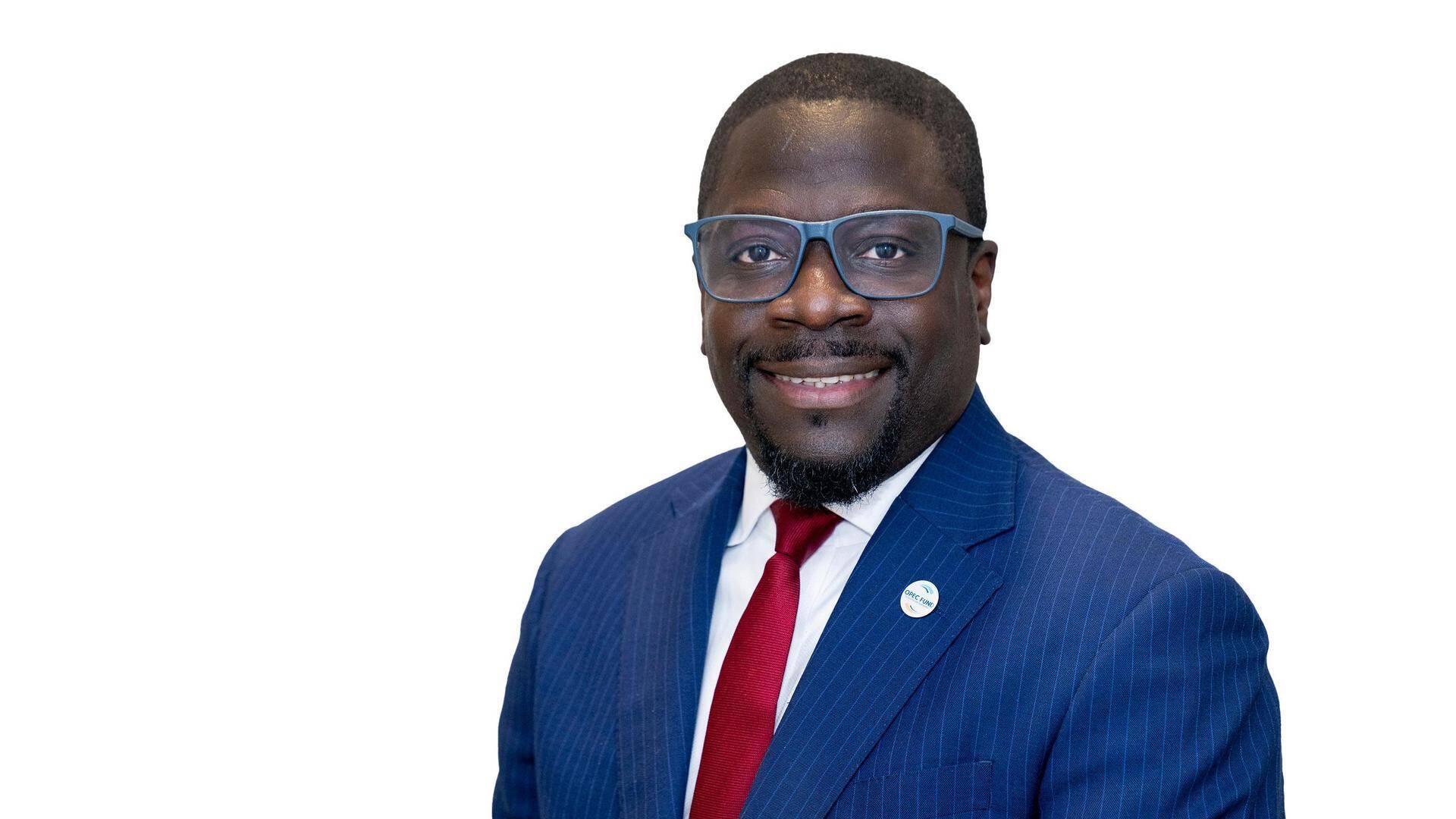
Adebayo Babalola, Director, Strategic Planning, OPEC Fund, shares what client countries are asking from multilateral development banks
The debate on multilateral development bank (MDB) reform often focuses on capital adequacy, balance sheet optimization and scaling development finance. An ODI Global report, Reforming Multilateral Development Banks: Perspectives from Client Countries, adds another dimension by bringing client country perspectives fully into view.
Drawing on survey responses from 650 government officials in 125 countries, along with 12 country case studies, the report weighs how client countries see MDBs. They are asking for faster delivery, stronger coordination, better preparation and more effective partnerships.
Adebayo Babalola, Director, Strategic Planning at the OPEC Fund, reflects on what the findings suggest for the wider MDB system and why partnerships are central to the future of development finance.
OPEC Fund Quarterly: What do we learn from the ODI report?
Adebayo Babalola: The main takeaway is that the MDB model remains relevant, but expectations are evolving. Eighty-three percent of respondents rated financing at better than market terms as very or extremely relevant to long-term development. Eighty-four percent said the same for policy advice and technical assistance, 86 percent for convening stakeholders and 76 percent for research and analysis.
That combination matters. Countries value MDBs because they bring finance, technical expertise, policy dialogue, knowledge and convening power. The strongest institutions are those that combine these functions in support of country priorities.
OFQ: Why is this discussion important now?
AB: The development finance environment has become more difficult. Many countries face higher financing needs, tighter fiscal space, debt pressures and infrastructure gaps. MDBs are being asked to do more, but work differently. Scaling up financing remains essential, but quality of delivery is just as important. Countries need finance that is predictable, coordinated and linked to implementation capacity.
OFQ: Coordination is increasingly central to the MDB discussion. Why?
AB: The scale of development challenges requires institutions to collaborate more effectively. Energy access, food security, climate resilience, water infrastructure and economic stability require financing packages that often involve several partners.
The ODI survey captures this: 48 percent of government respondents rated MDB coordination at country level as good or very good, while 74 percent identified co-financing as the top priority.
For the OPEC Fund, this finding is relevant. Around 70 percent of OPEC Fund operations have been co-financed with other MDBs, development finance institutions and bilateral partners. What has changed under the Strategic Framework 2030 is that partnerships have become more systematic and more closely connected to strategy implementation.
OFQ: How has this been reflected in the OPEC Fund’s recent work?
AB: One important example is the OPEC Fund’s deeper cooperation with the World Bank. The relationship has moved toward more structured operational engagement, including frequent pipeline discussions and earlier collaboration in the project preparation process. This has supported a significant increase in joint co-financing, rising from around US$200 million in 2023 to approximately US$800 million in 2025.
The OPEC Fund has also strengthened its partnership with the African Development Bank. The amended partnership framework and our recent Partnership Day in Abidjan reflect a shared interest in scaling up joint operations, including through a co-financing envelope targeting up to US$2 billion with African Development Fund countries through 2030.
OFQ: Why is project preparation at the heart of the MDB reform agenda?
AB: Project preparation is one of the most important elements in development finance. If projects are not technically, financially and institutionally ready, delays emerge later in the cycle.
The ODI survey identifies support for project preparation as one of the leading recommendations for shortening the project cycle, cited by 53 percent of respondents. It also points to gaps in capacity on the ground and limited grants for project preparation as major constraints to building strong project pipelines.
This was recognized under the OPEC Fund’s Strategic Framework 2030. The institution understood that scaling up development finance would require stronger operational readiness, better pipelines and closer collaboration with partner institutions.
That recognition informed the renewal of the grants window. Around 90 percent of OPEC Fund grant resources are now directed toward supporting operations, including project preparation. This allows grants to support feasibility studies, environmental and social work, technical design, procurement readiness and other activities that improve quality at entry.
OFQ: The ODI report also highlights concerns around processing times. What conclusions should MDBs draw from that finding?
AB: The numbers are clear. Seventy-nine percent of respondents said short processing times are very or extremely important.
That does not mean all complexity can be removed. Many development operations, especially infrastructure projects, involve safeguards, procurement requirements, technical studies and multiple stakeholders. Some complexity is necessary to maximize development impact and protect stakeholders, including vulnerable communities.
The issue is whether the system manages complexity efficiently. Better preparation, stronger coordination among financiers and earlier alignment with government implementation arrangements can reduce delays. This is why project preparation and coordination are closely linked to operational effectiveness.
OFQ: The MDB reform agenda focuses on balance sheets and capital adequacy. How does the OPEC Fund connect to that agenda?
AB: Capital adequacy remains central because development financing needs are large and MDBs must have the capacity to respond. For the OPEC Fund, access to international capital markets was a major milestone. It strengthened the institution’s ability to scale long-term development finance and supported the implementation of the Strategic Framework 2030, which targets US$20 billion in new financing from 2025-2030.
The reform agenda also encourages institutions to use capital more efficiently. Take the OPEC Fund’s Exposure Exchange Agreement with the Inter-American Development Bank, which enables both institutions to diversify portfolio exposure and create additional lending headroom through risk sharing.
This type of instrument shows how cooperation among MDBs is evolving. Institutions are working together not only at the project level, but also through financial mechanisms that strengthen development capacity.
OFQ: How do strategic initiatives fit into this partnership-based model?
AB: Strategic initiatives are another way of organizing partnerships around defined development challenges. Take our Food Security Action Plan, which allowed the OPEC Fund to respond to a global crisis with a dedicated financing commitment, while working alongside other partners. Mission 300 is another example of how development goals require coordinated action. The OPEC Fund’s participation supports the wider effort to expand electricity access in Sub-Saharan Africa by 2030.
These initiatives show that partnerships can also provide a framework for sustained engagement around priority themes such as food security, energy access, climate resilience and economic stability – allowing institutions to move from single operations to combined delivery platforms.
OFQ: What lessons should MDBs draw from these findings?
AB: One lesson is that client countries value MDBs most when their different functions come together. A second is that visibility is built through operational relevance. A third is that partnership-based institutions can play an important role in the next phase of development finance. The future MDB landscape will not be defined by scale alone. It will also depend on the ability to connect partners, mobilize resources, prepare projects and deliver effectively.
ODI Global
ODI Global is a global affairs think tank with offices in London, Brussels and Washington, DC. Founded in 1960 in London as the Overseas Development Institute, the organization researches global challenges, including the climate crisis, economic inequality, gender justice and geopolitical shifts. Its mission is “to translate rigorous, evidence-driven research into actionable strategies that promote a just, sustainable and resilient world.”
https://odi.org/en/