We use Cookies. Read our Terms
OPEC Fund at AIUIa 2026: People’s needs must guide global reset
“While the world has changed, people’s fundamental needs remain.”
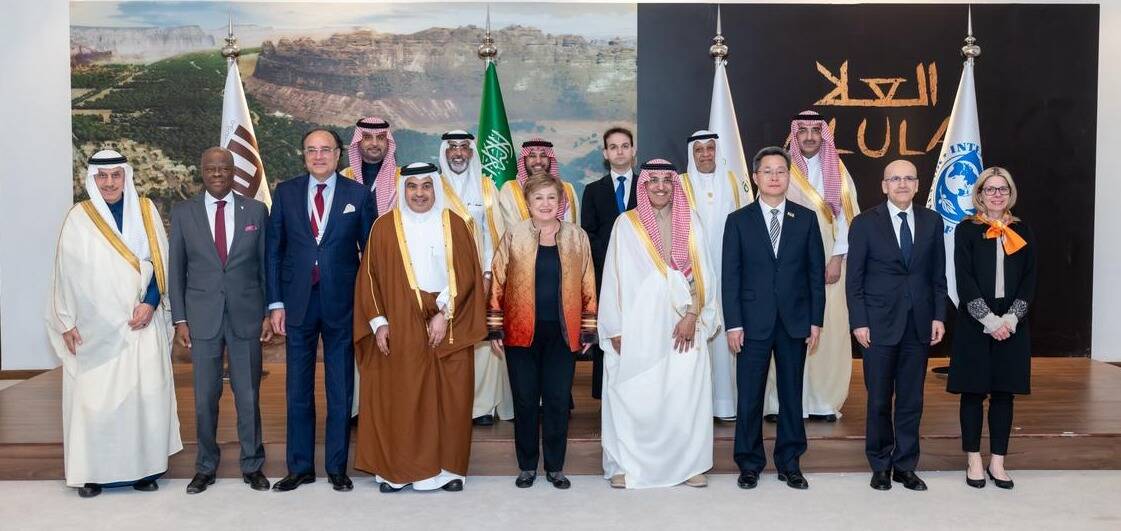
Against a backdrop of profound global economic shifts, OPEC Fund President Abdulhamid Alkhalifa joined high-level discussions at the Second AlUla Conference for Emerging Market Economies in OPEC Fund member country Saudi Arabia. At the two-day event, international leaders underscored the central role of trade, investment and coordinated policy in sustaining growth and resilience for emerging markets amid rising uncertainty and structural change.
The conference, co-organized by the Ministry of Finance of the Kingdom of Saudi Arabia and the International Monetary Fund, was held under the theme “Policies Amid a Reset of the International Trade and Financial Systems.” Discussions focused on the rapid structural shifts in the global economy and the implications for trade patterns, monetary policy frameworks and the role of technology in boosting private sector led growth.
OPEC Fund President Abdulhamid Alkhalifa joined high-level participants in a panel on sovereign debt vulnerabilities and engaged in a series of bilateral meetings. The President said: “This is a great opportunity to deepen our partnership with key actors in international development.”
The OPEC Fund has engaged in multilateral policy fora throughout its history to advance coordinated solutions to global development challenges. On the sidelines of the conference, Dr. Alkhalifa’s schedule included meetings with ministers of OPEC Fund member countries Kuwait, Iran and Saudi Arabia, partner countries Senegal and Syria, and with partner institutions, including the World Bank. He also extended invitations to the annual OPEC Fund Development Forum in June 2026, which will mark the institution’s 50th anniversary.
Participation at the AlUla Conference reflects the OPEC Fund’s ongoing engagement in global economic discussions where shared challenges — including slowing trade growth, fiscal pressures and structural reforms — are considered in the pursuit of stable, sustainable development pathways for emerging market economies.