We use Cookies. Read our Terms
Helping Côte d’Ivoire become an upper-middle-income nation
A country mission deepens bilateral relations and sees the successful rehabilitation of Cocody Bay, where nature is making a comeback
The cooperation between Côte d’Ivoire and the OPEC Fund is entering a new phase. During a recent mission, Africa Region Director Mahmoud Khene, accompanied by Country Manager Tarik Ladjouzi, met with senior government representatives to launch a strategic dialogue for the preparation of a Country Partnership Strategy covering 2026-2029. “We are looking at an envelope of up to US$500 million,” he said after a meeting with Ivorian Minister of Planning and Development Souleymane Diarrassouba in early April in Abidjan.
Located on the west coast of Africa, Côte d’Ivoire is the world’s largest producer of cocoa and cashews. Other significant agricultural resources include coffee, palm oil and rubber. The country also holds large mineral deposits alongside offshore oil and natural gas. According to the World Bank’s latest assessment, Côte d’Ivoire has undergone a “steady and remarkable” economic transformation in recent years with one of the fastest growth rates in Sub- Saharan Africa, “reaffirming its position as a regional hub.”
The OPEC Fund is part of this success story with a series of impactful projects in sectors such as energy, agriculture, finance and transport. Following the first loan in 1977, total approvals to date exceed half a billion US dollars.
The mission also provided the OPEC Fund delegation with the opportunity to meet with the highest authorities of the Cocody Bay Rehabilitation Project, designed to carry out environmental works to improve the health and living standards of around 1.9 million inhabitants in and around Abidjan. The area was highly polluted from agricultural and industrial activities. “It killed all the fish,” a local fisherman recalled. “And that was a problem.”
The US$32.7 million project was co-financed by the OPEC Fund with US$11 million alongside the Arab Bank for Economic Development in Africa (BADEA). Building on the success of the first phase, the delegation was presented with ambitious plans for a second phase.
The project includes improving public health by reducing vector-borne diseases such as malaria, reducing flood risks, restoring ecosystems, upgrading infrastructure and attracting investment to develop the potential of the region as a place for recreation and tourism.
Good progress has been made. “Since the channel opening, different species of fish have come in, even crustaceans. They coexist with the fish that were already in the lagoon. At first, some couldn’t adapt because it was freshwater, so some were overwhelmed. But now they are used to it – they live together,” reported a local fisherman.
The improvements are numerous. They include new infrastructure that has reduced the danger of flooding, the revitalization of critical areas, improvements in public health and the return of the natural habitat: “In the morning, there was a fish swimming around in the water. It was a joy to watch,” one resident said. Another concurred: “The work has been done very well.”
In high-level meetings with the OPEC Fund delegation, the Ivorian Minister of Planning and Development Diarrassouba emphasized the importance of the cooperation: “The OPEC Fund is a strategic partner of Côte d’Ivoire. The US$500 million envelope reflects the relevance of our model. Our ambition is to improve coordination, accelerate disbursements and optimize the impact of each financing mobilized in support of our strategic plan.”
The Côte d’Ivoire National Development Plan (PND) 2026-2030 aims to transform the country into an upper-middle- income nation by the end of this decade, with a projected investment of some US$200 billion and an income per capita target above US$4,000. The plan seeks to accelerate economic growth, bring poverty to below 20 percent, while promoting industrialization and infrastructure development.
The major pillars are agricultural modernization, human capital development and infrastructure expansion, exemplified, for instance, by the construction of a highspeed railway line connecting Côte d’Ivoire with its neighbors Mali and Burkina Faso.
Director Khene backed the authorities’ plans: “We support Côte d’Ivoire in implementing high-impact projects within the framework of enhanced South- South cooperation,” he said. “The OPEC Fund’s primary mission is to support the socioeconomic development of partner countries, particularly through the financing of projects in key sectors such as education, health and infrastructure.”
In recent years, the OPEC Fund has significantly stepped up its engagement in Côte d’Ivoire, including a visit by President Abdulhamid Alkhalifa in January 2025.
The commitment is also reflected in the depth and breadth of projects, ranging from loans for on-lending to small businesses to powering key energy projects. Meanwhile, support for the vital cocoa trade is boosting traceable exports to secure the sustainable development of this key sector.
The strength of the relationship was also expressed during the latest mission, which featured a large number of high-level engagements, including meetings with ministers overseeing key sectors such as energy, health, infrastructure, water and sanitation, food crop production and education. The visit was covered widely by local media. Director Khene summarized: “We applaud the strength of the country’s investment framework and the clarity of its strategic priorities. They constitute solid foundations for further progress.”
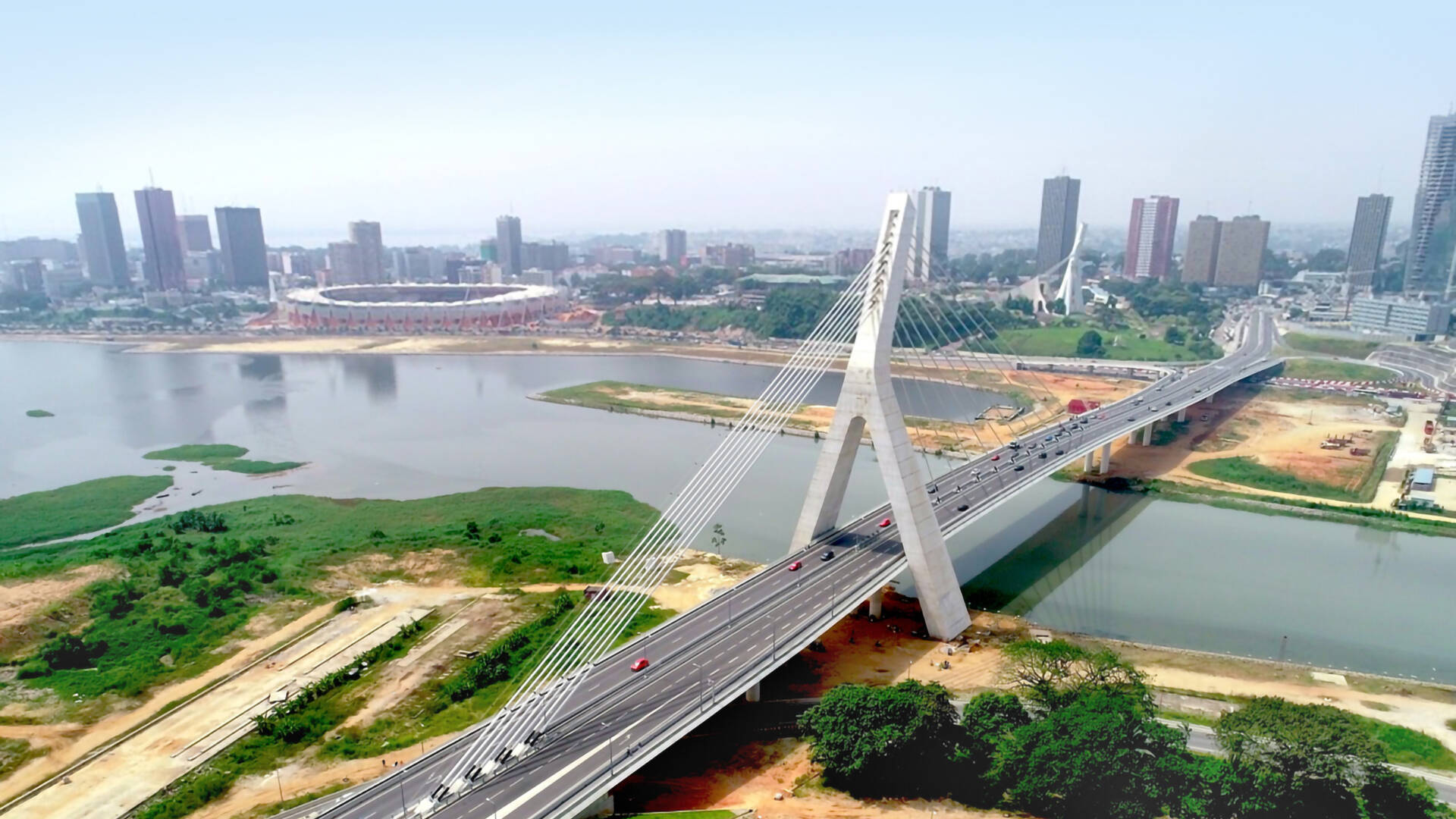
Photo: PMU, Cocody Bay Rehabilitation Project