We use Cookies. Read our Terms
“Global food production will remain vulnerable to shocks as long as it is dependent on a handful of inputs from a few countries”
Global fertilizer supply is highly concentrated, with just a small group of countries controlling the vast majority of worldwide production, warns Ruth Hill, Director of Markets, Trade and Institutions at IFPRI
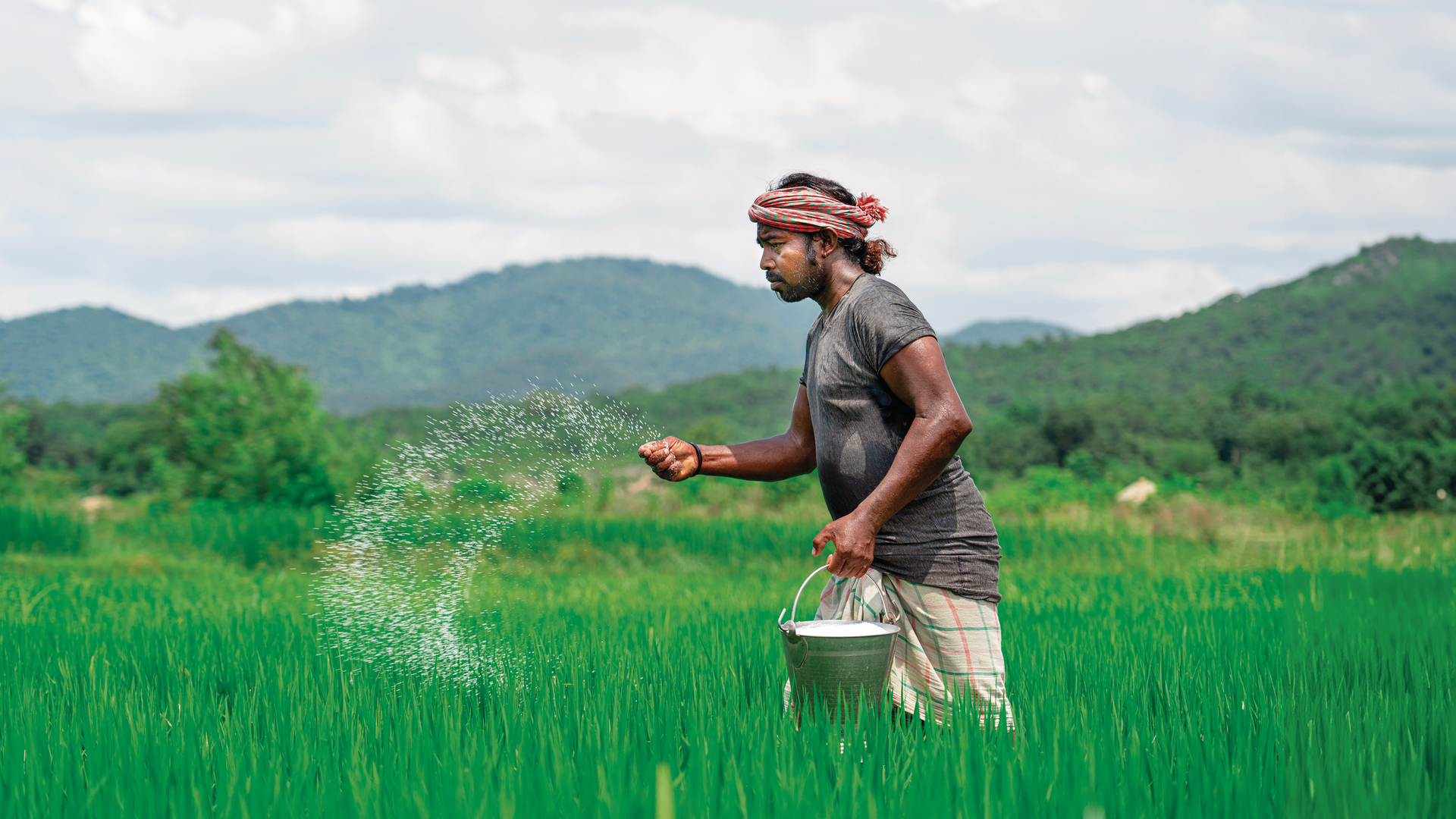
Photo: Arnav Pratap Singh/Shutterstock
Ruth Hill is the Director of the Markets, Trade and Institutions Unit in the Food and Nutrition Policy Department at IFPRI. She was previously a Lead Economist at the World Bank, where she led work on the distributional impacts of climate change, fiscal policy, markets and institutions. She also led the development of the World Bank’s Rural Income Diagnostics and conducted Poverty Assessments and Systematic Country Diagnostics in East Africa and South Asia. She has published widely and holds a doctorate in economics from the University of Oxford.
OPEC Fund Quarterly: Fertilizer prices have risen dramatically since the closure of the Strait of Hormuz at the end of February 2026 and the World Bank forecasts a rise of more than 30 percent this year alone. What will be the short and long-term impacts for the most vulnerable countries?
Ruth Hill: The most vulnerable countries are those that rely heavily on fertilizer imports for domestic food production, have not yet secured fertilizer supplies for the current or forthcoming seasons and cannot cushion the impact of high prices on farmers, i.e. through subsidies.
The impact may be marginal in the current Northern Hemisphere season for countries that had already secured fertilizer supplies and in which farmers had already made planting decisions and input purchases. In forthcoming seasons, most immediately the main forthcoming Southern Hemisphere season, the impacts may be larger with farmers shifting away from crops with high fertilizer needs, reducing the area of crop planted in some cases and applying less fertilizer. Production may be lower as a result which would impact domestic food prices.
OFQ: Is there a ceiling for these prices or can they rise indefinitely?
RH: High prices are unlikely to rise indefinitely – high prices normally result in reduced demand through changing crop production decisions and reduced application of fertilizer (reducing amounts applied or changing the mix of nutrients applied). Lower demand reduces the upward pressure on prices.
But it is important to add that in large fertilizer using countries such as India, where fertilizer subsidies cushion the price impacts for their farmers, this transmission towards reduced demand will not occur. Higher prices also lead to increased exports from countries that had not previously been exporting and increased production, which can help drive down prices. However, such greenfield fertilizer projects take several years to come online so there is a limit in the amount that production can increase in the short run.
The duration of the high prices will depend in the short run on how long shipments through the Strait of Hormuz are curtailed and in the medium-long term on new trade routes and increased fertilizer production elsewhere.
OFQ: At what point do price increases become unsustainable for the most vulnerable countries raising fears of turbulence from famine to political turmoil?
RH: Higher fertilizer prices present a significant burden to farmers, especially smallholder farmers with limited resources. If sustained over a longer period, they can lead to decreased agricultural production and contribute to a rise in food prices.
We are not at the point of famine yet: there may be increased supply from other countries (see p.8), application rates may not reduce as much as expected (they did not reduce too much in the Ukraine crisis) and even if application rates fall, their impact on production may be marginal for major producers where use is very high and marginal reductions can be managed through greater efficiency in application or substituting with other nutrients at the margin. These are all things we need to monitor carefully.
OFQ: Are there any viable short-term reactions, for instance finding alternative producers from different regions, and long-term responses? An obvious idea would be to boost capacity. But given the environmental impact, is this really a viable solution?
RH: If countries such as China and Russia relax some of their fertilizer export restrictions, prices would decrease (see p.8). Some fertilizer producers have the capacity to increase production in the short run and some can expand capacity relatively swiftly. This will help reduce the upward pressure on fertilizer prices, though it is clearly not sufficient to compensate for the present supply reductions caused by the war.
New production sites require long lead times and substantial investment and are likely to remain concentrated in regions with access to low-cost natural gas or significant mineral deposits.
OFQ: Are there feasible and practicable alternatives?
RH: Truly alternative solutions such as crops bred to procure nitrogen from the air (in the way legumes can) or microbial fertilizers are in the works but require further development, testing and scaling. However, there is a lot that is ready to scale on improving fertilizer use efficiency by changing the mix of fertilizer and other inputs, or the way in which fertilizer is applied.
The benefits of integrated organic and mineral fertilization approaches increase as fertilizer prices increase, so there is more to be gained from altering the mix of nutrients applied than before. This is not replacing fertilizers but applying them with increased amounts of other inputs so that the same amount of crop output can be achieved for marginally lower rates of fertilizer application.
Similarly, the benefits of agronomic practices such as microdosing that increase the gains from using fertilizer but can often be quite labor-intensive become more cost effective as fertilizer prices go up and provide an important means by which more can be gained from each unit of fertilizer applied.
Additionally, there is an important role of new technology in developing alternatives to current fertilizer production. “Green ammonia” powered by electrolysis from renewable energy has been technically feasible for a long time, but recent investments are moving this towards becoming cost effective. Once it is cost effective, it will importantly sever the reliance on natural gas or coal for the production of ammonia. This is hugely important because ammonia has many other applications too in other chemicals, industry and energy.
OFQ: Once a cessation of hostilities is firmly in place, how long will it take for a normalization of markets?
RH: Fertilizer market normalization will not be immediate since there is a huge backlog of shipments, but also because the war has damaged some fertilizer production sites in the Gulf region. Analysis by Shawn Arita presented in an AMIS/IFPRI policy seminar in April1 showed that it would take until the end of 2026 for fertilizer prices to return to pre-war prices even if there was an immediate cessation of hostilities.
OFQ: Do you expect long-term consequences and damage?
RH: Some fertilizer production capacity has been damaged which means prices are projected to remain elevated even once trade normalizes. A key question is whether there will be an impact on global food production in some of the major growing seasons, but this is not yet clear and depends on factors such as how crop choice and input use decisions are impacted and whether production falls if fertilizer use falls. Also, higher fuel prices are resulting in higher consumer food prices in many countries with already immediate impacts on welfare.
OFQ: Can the situation with fertilizers be compared to hydrocarbons or are the commodities completely different?
RH: They definitely share some similarities. Both oil and fertilizer production is concentrated in a few regions, which make both sectors prone to supply shocks. Both also have a huge impact on food systems. The connections between natural gas and fertilizers are even stronger since natural gas simultaneously serves as a feedstock for and powers most ammonia production around the world. Ammonia, the building block for most nitrogenous fertilizers, is one of the most widely produced industrial chemicals, and beyond fertilizers has many applications in other chemicals, industry and energy.
OFQ: What lessons can we learn from the crisis?
RH: Global food production will remain vulnerable to shocks as long as it is dependent on a handful of inputs that come from a handful of countries. Accelerated investments in technological development to reduce this vulnerability is essential, e.g. seed-based solutions to improve sustainable nitrogen provisioning and green ammonia technologies.
Today there exist strong possibilities for improving nutrient use efficiency that did not exist before. Meanwhile, the availability of location-specific AI-enabled advisories helps scale these approaches which are often site-specific.
Nutrient use efficiency will be more attractive when nutrients reflect their true cost. Governments need advice on how to provide support to farmers that ensures their profitability without increasing subsidies that mask the price of inputs. The policy options are increasingly available.
International Food Policy Research Institute
The International Food Policy Research Institute (IFPRI) provides research-based policy solutions to sustainably reduce poverty and end hunger and malnutrition in developing countries. Established in 1975, the institute supports evidence-based policies that contribute to poverty reduction and help ensure that all people have access to safe, sufficient, nutritious and sustainably produced food.
IFPRI is a Research Center of CGIAR, the world’s largest agricultural innovation network, and the only CGIAR center exclusively dedicated to food policy research. It currently has more than 480 employees from around the world working in over 70 countries, with about half of the research staff based in developing countries. Research is aligned with CGIAR’s five impact areas: nutrition, health and food security; poverty reduction, livelihoods and jobs; environmental health and biodiversity; gender equality, youth and social inclusion; and climate adaptation and mitigation.